
From VTGuitarman's previous thread:
The current situation facing all of us is unprecedented. While TKP is generally not a place to discuss "breaking news" or emotionally charged topics, obviously the coronavirus pandemic affects us all. We recognize that TKP is a place many of us turn to for social interaction in these trying times, and discussing the coronavirus can be cathartic for many of us. We hope that we can continue to come together as Hokies to weather this storm.
That said, the explosion of comments in recent discussions has veered from useful to pointless and argumentative. Going forward, only Joe and the moderator team will post new "general discussion" threads on this topic. Others will be deleted. Moderators will lock threads as needed if discussion becomes destructive.
We invite you to use this space to discuss important information related to the coronavirus pandemic, like important advisories, closings, cancelations, and impacts on daily life. We are lucky that our community has many subject matter experts in health, science, public safety, public affairs, and local government, among others. Please continue to share your knowledge!
As always, the Community Guidelines will be enforced by the moderators as best we can. At this point, repeat offenders who continue pointless bickering and whose posts continually incite arguments will be banned, at least temporarily. Doing so is in the interest of keeping TKP a strong and positive community.

Comments
stop antagonizing each other
Leonard, do better
Everyone who "cant help themselves" in replying, do better
To Reply to This Post from Jwillhokiealum
The problem with this idea is the 2 week incubation period before those who are sick start showing it. This plan doesn't allow the spread to be realized until its too late.
I'm not completely against reopening. I think some measures should be relaxed a little. However, if you're going to take a long term approach here, you need to have a timeline that meshes with what we know about this disease. A 1 week waiting period before saying 'all clear!' for something that has a 2 week incubation is not the smartest move at all.
Or do some testing, maybe not everybody, but a large enough sample to understand if there is spreading again.
I think testing is the big missing piece to all of this. At this point everyone is really tired of all-corona-everything and everyone wants things to go back to (as close as possible) normal. People who aren't working want to go back to work. People who like to go out and socialize want to go out and socialize. People who want to get their hair cut want to be able to do that. The answer to all of that has to be testing, right? I just don't know why it's taking so long to get wide-spread testing and how much longer we'll have to wait for it.
Its been 4 months since we knew this was a big deal, and we still can't test for it. Its gone from incompetence, to a national failure, to borderline malicious that we still can't test for it.
And given how quickly politicians and other influential groups are pushing to open everything back up, it does make you wonder if the tests are being purposely withheld so that the public doesn't get to know just how bad it really is while we're out spending our money to save the economy.
for the love of all things holy why on earth would you start this discussion
it's impossible to have any meaningful discussion off of this that stays inbounds of CGs
I really feel for you, Guitarman, and Chris. You guys are doing what you can on these threads.

Then why even have these threads?
Seriously, I am asking, why the hell are we going through this time and time again? If we can't talk about it, just ban the fucking topic
Don't be a Wahoo. Put it this way, discuss facts, not conjecture.
You just want to leapfrog Discussion Thread IX for Discussion Thread X because it looks cool.
I see you, bro.
Because people like Fernley have provided our community with insider information we otherwise couldn't possibly know following it as is.
Guitarman explained in another one of these threads how polyamerase RNA testing (I probably butchered this I'm sorry) works and explained how some positive tests can potentially result from people who've already had the virus but is no longer active.
This kind of information is valuable to many TKP'ers. We want there to be a place for info to be shared and exchanged.
Those things are patently different than emotionally charged (whether rightfully so or not) discussion that doesn't have any kind of end goal in sight.
Additionally, I will level with you here, I am also dubious about how testing has been executed in our country, and why it seems prohibitively difficult to get tested in many areas. However, us having this "what if" line of discussion and/or obviously politically motivated opinion tangents does not provide the community with any of that type of information listed above. Since 99.9% of us don't have the info needed to actually find solutions or resolve those discussions it just ends up being tangential noise.
There are plenty of places online like Reddit to float or participate in these kinds of discussions, but there just isn't going to be anything productive coming out of it on here.
you don't see a difference between "sharing covid-19 related news" and "invoking a grand conspiracy that the american governmental system as we know it is withholding testing in bad faith to keep the economy afloat"?
you've been around TKP for 6 years and almost 20000 posts and you don't understand the TKP CGs about not turning things into a political discussion???????????????????????????????????????????????????????
So, I reread Alum's comment and he definitely could have posed some of the same questions and been less conspiracy theoristy about it providing less bite.
But the whole point I am trying to make is, it's impossible to separate this topic from politics.
Because of that, if we are to have these threads, we all need to tread carefully. Don't be an AssPocket in the last thread about things.
Posing those questions is impossible to do and stay in within guidelines on this board. It doesn't matter how you word them.
Thanks for helping prove my point.
You are welcome.
and Fernley brings up time and again that the pandemic response team was fired and somehow manages not to violate CGs or even get so close to the line that others are bound to leap over it.
edit: this thread is meant to be about the What and less about the Why. You start asking questions about Why, you start getting close to CG violations
//// Nothing follows.
We absolutely can be civil.
. I just want Thread IX to stay alive. 9 is my number. Carry on.
This pandemic is political. Policy decisions, timelines to open up, funding, response teams, etc, its all dripping in politics. Quite frankly, I think its a load of crap that we're supposed to talk about what is being done without being allowed to mention the forces that are driving why these things are being done. Understanding why helps you get the full picture, and ignoring that just leads to a bunch of mindless minions out there who aren't allowed to think for themselves. You can't have a quality discussion on this, and especially the reaction to it without discussing why decisions are made.
Quite honestly, despite your best efforts, if this is the kind of parameter you are going to set on this pandemic, then this is not a topic that can be had on this site. The fact we're at Thread 9 in the span of a month and a half should tell you all you need to know that its not possible to have this discussion within these parameters.
And I suppose you believe your comment above qualifies as quality discussion?
We're moderating to the guidelines set forth by the site. If you don't like it, feel free not to participate 💁♂️
Gonna split the difference here. I'll agree his original comment wasn't exactly quality discussion, but some of the underlying questions absolutely were.
I still think we're fooling ourselves if we think we can have any meaningful conversation about this thing without being political. That's why my other comment was about everyone being on their best behavior and not acting like me in the last thread.
I think if we are going to have these threads we remind people to be civil, have the discussion, and let the leg/moderator system do its thing. And if someone gets out of line, they take their licks and we move on. I was wrong at times in the last thread, and every time I was legs were taken and life continued. Just my humble opinion.
Yes, it is political, and has been very politicized. But in here, those things don't have to be discussed.
Stick to these talking points, color inside the lines, and it will be ok. We don't need every bit of minutia to talk about fireworks being cancelled. Just simply a post stating they have been cancelled. If that cannot be handled, then don't wander in.
You may be right about politics playing a part in this, HOWEVER, as gobble, gobble pointed out, when we start talking about why (especially related to motives), we would have a hard time doing anything more than speculating. If someone could point to quotes from a paper as to why someone is doing something, it isn't speculation, even if it makes that person look bad. The challenge is that some people have a hard time not jumping full over the line to (totally unhelpful) political bashing.
There's a reason there's a saying regarding not bringing up politics or religion as topics of conversation. I also read that someone said that saying is bad because it means people can't have a calm discussion about those topics.
Ultimately, what is anybody on here trying to accomplish in these threads? I value the insights of the members who have a science (biology, biochemistry, epidemiology) background. I appreciate the number crunching and analysis of others (can't remember who said that based on the doctors in California and their "findings" the death rate in NYC would imply that 40+ million people in NYC had it). Learning the challenges the US had in purchasing test kits and PPE that Fernley brought up was very interesting. Number analysis and thoughts on the models were interesting. Analysis of what might happen when things start opening up is interesting. Also like hearing the challenges and thoughts of other members.
Posting comments about such and such politician is an idiot for doing XYZ is none of those things. What does it help? What does the person hope to accomplish? Maybe trying to sway votes in November? If people addressed it as "I don't like such and such politician's decision to do XYZ because of these reasons, what do you guys think?" is a much better way of addressing the political. As you pointed out, we've had a lot of threads on this, but at least one was cut short because of people getting incited over politics.
This may very well be true, but how can anyone talk about what's going on without addressing some of the things in Alum's comment?
All of these threads have to walk closely to the line and even go over from time to time to even exist. Otherwise, these threads will simply be everyone checking in to say they're ok and talking about the stats of how many unfortunate souls bought it this week.
Now, I make no excuses for myself in the last thread. I was tired of some things and I began poking. I was wrong and I admit it. And I apologize. But I do think these threads serve a valuable purpose right now and we need to talk about some of these things.
I will try to do better on my part to keep things civil, but I, personally, don't think you can stop talking about things like this if these threads are going to happen. And they should happen IMHO.
If Alum can't post an opposing or risque opinion that counters the rainbows and butterflies side of things maybe these threads need to be taken down all together. It is unhealthy IMO to let some discussions go and other not because you or others may disagree. EVERY post on these threads are pure conjecture and opinions unless it is a direct link to a professional virologists research on the subject at hand.
False.
You've cherrypicked what you want to reference. There's been plenty of discussion about school closings (this is the 9th thread...) working from home, vacations, etc. Not EVERY post is conjecture and opinion. And not all the discussion has to be ABOUT the virus. How it has affected daily routines and such have been very successful topics in these threads.
That is enough for me.
Then don't participate?
Dude he suggested there is a government conspiracy to withhold testing to purposely endanger US citizens and you think we can have a civil discussion after that? There is no place for that here.
It was an opinion of his that might tweak some people sure. Was it in poor taste? Maybe. The government HAS secretly tested American citizens in the past on multiple occasions with or without their consent. His opinion isn't based on fantasy at all. Is it political opinion or a social opinion? I think that is where the gray area lies.
which is not at all what he was suggesting, so there's that too.
Man, listen to the MOD.
Maybe we should have a thread dedicated only to conspiracy theories and the like. A buddy texted me last night that he overheard a coworker say that within two months Bill Gates, French Pres Macron and and the Pope will have everyone microchipped!!
for the love of all things holy why would you re-start this conversation
there is a way to post dissenting opinion. that wasn't it. this isn't a debate, it's site rules.
"Don't start duplicate threads. Use the tracker."
Go take a walk, get some air, do something else. Arguing with a MOD isn't going to get you anywhere.
Jesus dude, maybe you should join me.
"Respect the signal to noise ratio."
Ditto
Please stop giving the mods a hard time. Thanks.
This place has become a boys club. Alum has up votes for his crazy conspiracy theory but, I get blasted. After 7 years I'm out. The mods do not follow the CG's themselves. Please delete my account.
I have all the legs that I have because I post a lot and use a lot of gifs that people like. I also post some controversial shit and have been known to be blurred or even UVa plaided. Shit happens, people aren't always going to agree with you. That's ok, differing opinions drive conversation.
With that said, the ggc, guitarman, and chris are doing the best they can here. I may disagree with how this is being handled, but that doesn't really mean a damn thing. They're the mods, they have the final say. I may have pushed back earlier in this subthread, but at the end of the day, if that initial pushback is resisted, that's it. Game over man, time to let it go.
If they ask you to jump, jump. Don't dig yourself a hole, it will not end well.
LOL, keep it real man. See ya later. I was serious
Try doing our job for one day. I leave for a little bit and have a brief network outage, and I come back to this little sub-thread and rant. We enforce the CGs as best we can and the mod team works together to try to make sure things run smoothly. In the end, you get what you pay for...oh wait.
We're doing our best to keep discussions productive. The issue here for Alum is that he has posted the same thing in multiple threads, and the discourse usually devolves into something unproductive.
In an earlier thread, we did get to the point of specifically bashing and supporting the president, which is absolutely not what we want to have happen on TKP. So we try to stamp out any possible tangents that won't end well. We only delete content when it is NSFW. We downvote stuff that's way out of line. We try to simply comment when something might go the wrong way but the comment itself is in somewhat of a gray area.
We have 9 threads because (1) the pandemic has affected our lives for months, an unprecedented amount of time for a single topic to be relevant to the TKP community, (2) someone doesn't follow the rules and we have to nuke the thread, or (3) the threads simply get too long. For a while, things were fine in these threads, just a lot of comments accumulated.
follow up to point (2) -- 90% of the comments in these threads are tame and fine and welcomed. maybe another 8% are borderline. the remaining 2% are what ruin it for everyone. and largely, it's the same handful of posters posting that 2% from thread to thread that cause the headaches
this just comes across like you're fully aware that you're pushing buttons and you're content to do it anyway
It's just humor, man. I really meant nothing by it.
I am fully aware that I'm pushing buttons, though. No argument there. As far as contentment, there's none of that... there's little comfort in being one of the TKP Corona pariahs. I just believe what I bellieve.
If humor is not appreciated, I'll post a fact. A group of researchers at Uppsala? University applied the Imperial College model to Sweden's current mitigation efforts. The model projected that if Sweden continued their plan they would be looking a over 40,000 dead by 5/1/20 and over 100,000 dead by the end of June.
They're currently sitting at a little over 2,000 deaths total.
There you go. No politics, no conspiracy, no conjecture. Just some numbers.
Another fact, Sweden has the highest fatalities and case count per capita in Scandinavia
Conjecture - They'll achieve herd immunity before any of us.
I have a question... When do you think we should open back up for business? When will you feel safe enough to go back to 'normal"?
That's just a friendly question... no agenda.
I don't know, when the science and medical experts say it is safe to begin our new normal. The old normal is dead.
edit: The problem with the US trying to quickly achieve herd immunity, is that we will completely overwhelm our healthcare system, and fill up the cemetaries.
Ehh, I'm not so sure about that
A lot of these reopenings are being done against the urges of the science and medical experts. People want things to go back to normal, and enough people believe that, nothing is going to change long-term.
Give it 18 months, and we will be right back to how we were operating before, down to China keeping their wet markets open. The last time we reacted to 'things can never be the same again' it turned into the security theater known as TSA which studies have down doesn't actually do anything to keep us safer.
I think you're overstating the memory of the average person. Once we have a vaccine (and I'm increasingly confident we will), things will start to go back to normal. In a few years, it will be like nothing happened for the most people.
you're probably right, I keep forgetting that people, as a whole, are idiots.
It reminds me of this:

Thanks... another question off of your answer... What event is going to take place, or milestone reached that is going to cause science and experts to proclaim that it is safe?
And yet another question off your edit - We were supposed to flatten the curve with two weeks of lockdowns originally. Why isn't the curve flattened on 5/5? What data indicates that it isn't flattened (or that it is)?
It is very hard to de-regulate. The original goal was to prevent over crowding in the hospitals. Virginia hasn't had a crowding problem, so I say it is time to start relaxing some of the orders. I also think it could be regionalized.
question for you: what's the benefit of acting obtuse?
This isn't helpful. Leonard raises an excellent point. It will not be "safe" for quite a long time. So we are going to have to play it a bit unsafe and see where we get.
I nuked this because the potshots back at Leonard are equally tiring. Calling someone "obtuse" invites downvotes because it is a "personal attack" as per the CGs.
It might be an obtuse question to you, but you have a PhD in something related to this area, plus a law degree on top of it.
No acting. I'm most definitely a bit obtuse.
Just some genuine opinion gauging, and perspective gathering.
Sometimes it helps me to shut up and ask some questions.
apologies. I don't think you're obtuse but quite the opposite. You have a great understanding of the current pandemic phenomenon and the implications. You are also well versed in policy (especially liberty and fundamental rights). This latest line of questioning, to me, seemed like a deliberate act of provocation. Perhaps I misunderstood.
If sincere, here are some thoughts (that might not actually be good answers).
Scientists, in their role of scientists, aren't policy makers (Angela Merkel and other scientists turned policy makers excepted) . They provide the best data that is available and interpretation. Its up to policy makers to make decisions. Scientists prefer decisions based on the facts and the consensus that come about from those facts. And the truth of the matter is scientists can't say when it will be safe. Treatments and vaccines may become available, but they may not. So, imo, opening up the country and markets shouldn't be at a point of ultimate safety. But best practices (as understood by the best science) should be performed amongst the people, and unfortunately we are not seeing that happening even with government intervention. Best practices are lessening social interactions, wearing proper PPE, and maintaining sanitation (washing hands, disinfecting surfaces).
We know the curve has been flattened in the same way we know that gravity keeps the earth in a rotation around the sun. At the time of state lockdowns, we see the rate of viral transmission is high then lessens to a flatter rate. We see this in virtually every country. Sure Sweden never had a government lockfdown, but the people of Sweden (home of the Noble prize presentation) emphatically trust scientists at a much higher percentage than US and thus embraced the WHO's guidelines without a govermwnt enforced lockdown. You are right that we can never prove that we wouldn't have flattened curve without a govt lockdown. Just like we can never actually remove the mass of the earth to see if the earth stops its orbit. (Gravity is just a theory, after all.) But, we can use circumstantial evidence to show that, but for the lockdown, the US was on a trajectory to greater infections and greater deaths. We have scientifically proven that reduction of human interactions, wearing of PPE, increases of sanitation, reduces the ability of viral transmission. The govt intervention was to enforce this scientific understanding on a policy level. Similarly. we can prove that gravity exists by circumstantial eveidence with model calculations and experiment using vacuums.
So in sum, tl;dr, scientists don't know when it will be safe. They can provide the best evidence we have at the moment, but they aren't the policy makers. The curve has flattened and we know this from circumstantial evidence.
I like some of the points here and from Leonard, but I'll expand on my comments below where they can have literal room to breathe.
Same here. This is getting crowded.
I think most states have adopted some type of guidance in terms of trends, testing and monitoring for "re-opening".
Many locales have "flattened the curve". Like getting a wildfire under control, maintaining that control requires continuing certain types of mitigative efforts. Prematurely walking away simply negates the benefit of the work you've done to date and begs for a repeat.
If they simply dropped all of the restrictions to date and the outbreak surges, the economy will crash much more than we've seen to date. There is no scenario where the disease runs rampant and the economy is healthy.
Take a look at N. Carolina's phased reopening. I feel Gov Cooper is doing an excellent job using facts and data, and listening to the experts to get our state reopened.
https://www.northcarolinahealthnews.org/2020/05/05/coronavirus-today-may-5/
https://files.nc.gov/governor/documents/files/NCDHHS_PhaseOne.pdf
The stay-at-home orders, and closing of nonessential businesses flattened the curve. It was never about staying home to defeat the virus, it has always been about staying home so a giant spike in cases all at once didn't happen. Now, the governor feels as though the hospitals in the state will be able to keep up with demand so we can start easing up on some restrictions. Personally, I think we needed this type of direction at a national level, instead of state by state, but time will tell.
My MIL was a MD at REX hospital in Raleigh, and is still on their internal email distribution despite retiring about 5 years ago. There is serious worry right now that the measures put in place worked too well, and that we never really even got a legitimate first wave. The hospital had nowhere near the capacity cramp they were expecting, and has a lot of people worried that we'll get a big hit now that we're opening back up.
Yeah, I've seen that concern floating around as well. I personally do worry that there will be a spike in cases, and we will go back to being shut down, but I understand the pressure the states are under to get economies going again.
Trying to stay completely non-political while talking about a government response.
It is my understanding that legal experts concluded the presidents office does not have the power to make those decisions at a national level. I know from reporting the President asked governors to enact the restrictions as they were the authority for this crisis.
It is a hole in the framework of the powers that NOBODY anticipated.
Nobody puts plans in place for once in a century problems.
That's just not true. There was a plan, but it was scrapped a few years ago and not replaced.
Agreed on the plan and its outcome, and i will censor my comments on those particulars.
But i was referring specifically to allocation of powers of the executive. I'm guessing what should the president's powers be in the event of worldwide disease outbreak wasn't discussed a lot in Philadelphia
There's a lot of things that are happening nowadays that the founding fathers could not have possibly considered when drafting up the Constitution and the strong limits we have on amending it. Its tough to run a country in the 2020s based on philosophies from the 1770s-1780s.
We're getting squeezed in here, but I gotta reply.
The beauty of the Constitution is that the founders understood that they couldn't consider what would be going on in the 2020's so they left it open ended... It's up to the people to install the government that they want, and snap decisions are left up to the state... so long as they don't violate the Constitution.
It's a big reason why the U.S. is one of the newest countries on the planet, while functioning under the oldest Constitution.
The problem is that amending the Constitution is practically impossible in our current political climate, so we're not able to effectively adjust to the current era.
Without violating CGs, I'll refrain from digging further into this topic.
Maybe that was in the plan as well...
Interesting, because South Korea has seen zero new domestic cases for three straight days after quickly implementing a very effective plan of testing, contact tracing, isolating, and everyone in the country wearing masks at all times in public.
We could essentially snuff out all DUI's if every car came standard/required with those breath ignition things. We could end parole violations due to skipping hearings, etc with "contact tracing" via cell phones for everyone in a halfway house or house arrest. If we traced everyones cell phone, we could effectively end child abduction cases, fugitives, etc. We could put a significant curb in obesity if we banned the sale of hundreds of types of food and beer. I know Cornona is temporary (hopefully) , but hey.
See NY Hokie's post below detailing NY's plan to reopen. I think it strikes all the right notes for me.
If you're going to transition from "lockdown" strategy (e.g. italy, wuhan, here) to "testing and contract tracing" (e.g. south korea), you need to make sure that the testing and contact tracing infrastructure is available prior to opening back up.
It also makes sense to implement it once current infection rates are lower, and that hospital capacity is available to accommodate new cases in the case of a surge.
Interesting, but I'm not sure I'm headed there to ride it out.
https://www.businessinsider.com/sweden-coronavirus-strategy-explained-cu...
See y'all in part X!
I don't think tests are being withheld on purpose. See Fernley's posts about the challenges the US has faced with purchasing (or making them on their own).
I would think the pressure for politicians to open is from the vocal groups of constituents that want to go back to normal, along with the realization that under the strict lockdown, businesses are hurting. I think the challenge will be to do it right.
Doing it right encompasses some of the points others on here have pointed out - realizing that the incubation period is long enough that you won't see a big jump right away even if people are getting sick, smart moves on maintaining limitations to customers in shops, 6 feet distance as much as possible, etc. etc.
The other issue is the long term view of things. That's great if we can open the economy again, but if it's a wholesale return to normal, and things get WAY worse because of how quickly this spreads, the likelihood of a round 2 with way worse economic consequences becomes more likely.
In addition, you would withhold tests for one of two reasons. One is that you think it's more widespread than it is. If that's the case but there there's a low percentage of the population dying, you could use that as an argument for opening. If you think the numbers are lower than believed, someone could probably spin it that it's not as contagious or something.
Unfortunately, I think there is a sufficiently large portion of people that don't believe this is serious who will only believe it if it does hit close to home that we will wind up with a second wave of this. I hope I'm wrong, but...
The two week incubation period might not be as hard and fast as we thought earlier
https://annals.org/aim/fullarticle/2762808/incubation-period-coronavirus...
IMO time is the wrong scale to use to determine when to (take steps to) return to normal life - some combination of number of people infected, number of people with immunity, and hospital capacity needs to be considered. Additionally, there needs to be a rollback strategy. I think we should use a scale similar to what we did for terrorism threats after 9/11. Define 5 levels of social interaction:
Each level requires a level of success to reopen. For example - to move from level 5 to 4 we need to go 1 week with ICU's at 80% capacity or less. To move from 4 to a 3 we need ICU levels to get to 60% capacity for a week straight. If we're at a level 3, then the ICU capacity spikes up above 60%, we go back to a level 4. (I'm using the numbers as an example, but I think it should be a measurable goal of some sort).
Doing something like this also hold citizens accountable. Right now, everyone has different 'opinions' on how dangerous the virus is (or isn't), and everyone is asking 'how long until things go back to normal?' People need to stop thinking in terms of time, and start thinking in terms of actual objectives. I think this would help with that.
I think New York is trying the measurable driven approach sort of as you describe. It makes a lot of sense but it probably should have additional factors related to testing and/or resources available,
One of the problems with all of this is there's no indication of when we can go back to whatever 'normal' is going to be. There's no metrics for when things are better, what can be relaxed, etc. Just 'ehh, I dunno, panic. Or not, whatever'.
I think the unknown and the seeming lack of a plan is what is starting to affect people, whether that manifests itself in protests against the lockdown or declining mental health, or rampant substance abuse (my preferred affectation).
It seems like some kind of guidelines for opening up or plan that can show some kind of progress towards a concrete goal would make the whole thing more palatable and would make people more inclined to follow the rules. There needs to be some kind of carrot, the all stick plan only works for so long.
Well it's not going to be all clear, not even after 6 weeks. The plan can be seen here. For the record, I am not saying it is going to work or not. It's almost certain we will see a spike in cases. However, the ratio of positive cases to number of total tests is 2.26%. Six counties that were considered hotspots are now not. More people have recovered than currently have it. Testing capabilities are better now than they were a month and a half ago. If there was ever a time to begin returning to a limited version of normal, now isn't a bad time. It's contingent on the people, though. I desperately need a haircut but won't. I'm only going to the grocery store if I absolutely have to. I hope a lot of people have that same mindset.
Edit: is the link not working for anyone else, or is it just me?
Link formatting likely won't work because they put quotes in their URL. Try this
https://governor.wv.gov/News/press-releases/2020/Pages/COVID-19-UPDATE-G...
If we continue with the movie metaphors, this thread will likely be disappointing.
Are you referring to Rise of the Skywalkers since it's the ninth Star Wars film? No spoilers, please!
Could also be Star Trek: Insurrection, which was god awful
Yup, referring to both.
Not that I think SW9 sucks, but I was expecting things to be wrapped up differently. I had my own ideas based on the title that would have been a nice wrap up to all 9 movies.
ST9 wasn't so much as bad as just blah, especially after First Contact kicked ass.
Per the governor, status quo in Virginia until potentially easing restrictions on Friday, May 15 (phase I of a reopening of the economy/society).
And he can use data from those other states that implemented Phase 1 earlier as a partial barometer on behalf of the safety of Virginians to determine best next steps. The gov, as an experienced doctor, that some may disagree with and want the doors opened earlier, at least seems to have a rational approach to this.
So, Journey to Big Corona?
Just so that everyone is aware:
Cinco de Mayo falls on a Taco Tuesday and nobody can enjoy it due to a virus name after a Mexican Beer.
....which isn't even being produced anymore
So those 6 I still have in my frigde are probably worth money now.
I have pretty good availability to some Mexican style beers.
I live a long ways from you, but, Oskar Blues Mexican Logger and Beerito are two of my favorites. What corona/XX Amber (respectively) could/should be.
These threads are starting to remind me if the movie Edge of Tomorrow.
At least we can look forward to meeting The Angel of Verdun.
(I'm purposely not posting the obvious gif)
CDC stats
I know we have some great statisticians on here. Can somebody help me to see if I am interpreting these stats correctly? It appears we as a nation have a lower than expected death rate from February to May. Does that mean the stay at home orders have decreased deaths elsewhere to make up for the increase in Covid deaths? Am I interpreting wrong or oversimplifying it?
That is probably part of the explanation. If fewer people are driving, there are less fatal car crashes. It may also be that COVID is pushing people who would have had other fatal events (heart attack, etc.) over the edge and the cause of death is being assigned to COVID.
I would like to see if there is a correlation or if this is an anomaly, but your second point sounds reasonable. Given that a large portion of the people dying from this are elderly or immunocompromised people, it makes sense that COVID-19 is now responsible for deaths that would otherwise be due to other causes within a reasonably close time frame.
I hate this virus.
But if I am reading it right, we are below average counting Covid deaths. It is also likely to change rapidly as we ride out the peak. I just found it curious.
You can also look at NYC and see they are at 215%. But if you calculate that out, I have them at 17k above average with only around 12k attributed directly to Covid. This tells me they were 5k over the very not flat NYC curve.
But on the other hand, there's a lot of people who think the police aren't doing their jobs anymore, so they drive faster or are more likely to run from the police, leading to fatals. From what I'm seeing, the numbers are roughly the same year-to-year on that front.
Surprisingly, I've seen numbers regarding suicides have gone down in some areas. The theory is that people prefer to kill themselves in solitude, which isn't something that most people have right now.
The actions of the car insurance companies would suggest that accident rates are down since they are refunding premiums. I don't have any accident numbers to back it up, but I do know that traffic volume was about 20% of what it normally was in April.
I do believe minor accidents are going down, but the rate of the more serious ones is remaining the same.
Most cases of fatal accidents usually involve people going too fast and running off the road, or doing something else they shouldn't be doing. So those circumstances haven't changed.
Just read an article that estimated that traffic around Richmond was down 40-50%. Also said the staties are ticketing more people than usual driving over 100 mph. They postulate the empty highway just begs for scofflaws to wind 'er up. Also mentioned was that it seems that speed is now more prominent in fatal crashes relative to other causes.
Fun fact, in February they tried to schedule traffic counts for the new Christiansburg Bus Depot. I am pretty sure they are going to have to delay the project at least 6 months just to get the buses back in rotation and normal traffic levels.
Maybe someone else can chime in, but when visualizing the data it doesn't appear to be out of trend to be getting fewer deaths than expected for quite a while now.
That chart lost me. I don't know what they are showing.
The way I interpret it is: The "expected deaths" that we are comparing to is the orange line. It is calculated by averaging the number of deaths across the US for the given week for the last 3 years. The blue bars are the estimated deaths in the US this year for the given week indicated. The "plus signs" indicate weeks where the number of deaths exceeded "expected deaths". The website also says there is usually a 1-8 week lag in getting all data, so you would expect the blue bars for the last several weeks to grow taller as we go forward.
But that graph goes back to '17. If the orange line was an average, there would be data above and below it.
It's the average for the given week, not averaged across the year. So if the blue bar is below the orange line for a *given week*, it means that the average deaths for that *given week* in the previous three years was higher.
Using Estimates from eye-balling the graph: For Jan 1, the average # of deaths for that week in 2017-2019 was ~63k, but in 2020, there were only ~60k hence the blue bar is below orange line. However on 4/1, the average of last 3 years was ~58k, but this year was ~80k, so blue bar is above orange line. Also, the CDC notes that the blue bars will adjust for the previous 1-8 weeks as more data comes in.
The orange bars for threshold of excessive deaths must represent some sort of upper percentile or else the average for that given week (blue bar) would not consistently be below the orange aside from the two obvious peaks.
Edit: it appears to be the 95% confidence level.
See, this is the kind of outstanding discussion that can be had in these threads.
You are right. I was conflating "expected deaths" with "excess deaths". In my haste I didn't read them as two seperate words.
Looking at it again, I think the incomplete data in the last two weeks was skewing the total as well.
My understanding of this is that this CDC mortality data is not exactly "real time" and that it takes 2-3 months for all of the death certificates etc to percolate. My guess is we will see a much higher death rate in the March-May (and maybe beyond) time frame once we have all the data.
I'll quote from the bottom of the page you linked to
So people reporting different numbers are not necessarily biased, but simply because different data has different uses. The limitation of different datasets is not always obvious and carries caveats that people don't have the time or bandwidth to interpret. However, people's uses of the data can certainly be biased.
The whole thing is really quite tricky in regards to cause of death. It seems simple at first glance, but it really isn't. I'm happy to throw out some scenarios and do an informal poll to see how people would judge a case's cause of death, but it is an inexact science. Which is why a lot of times (like for flu) we lump a bunch of codes together to guess what the true flu death rate was.
For example, we keep seeing COVID 19 deaths being compared to flu related deaths in the US. But the way those two numbers are calculated are completely different. Again, not for any nefarious purposes, but simply because its hard and complicated and messy and people try to simplify things down to easily discuss and compare.
So look at the COVID 19 deaths in bold on the left most column. It looks like 38k (which is most less than 60k+ you see reported). So is it all a big media hoax??? (spoiler: probably not) Now, look at "pneumonia deaths" in the middle. There is a base rate of 3000 or so before COVID and the tail end of the flu season (and I would note the footnote states that this actual excludes pneumonia deaths involving flu) and then it shoots up in tandem with COVID-19. Those "excess deaths" are almost certainly related to COVID-19, but aren't explicitly listed as such and aren't included in the COVID-19 deaths in "this subset of this dataset".
Bottom line, most people are doing the best they can with the tools that they have. Even the most simple part of this, how many people have died specifically from COVID 19, is complicated. And that's not even getting into whether we should count second order deaths or what not. Hope that makes sense.
New York just announced concrete guidelines for re-opening in a region. Two of the four metrics are based on testing and contact tracing:
1. New Infections: Based on guidelines from the CDC, regions must have at least 14 days of decline in total net hospitalizations and deaths on a 3-day rolling average. In regions with few COVID cases, the region cannot exceed 15 net new total hospitalizations or 5 new deaths on a 3-day rolling average. In order to monitor the potential spread of infection in a region, a region must have fewer than two new COVID patients admitted per 100,000 residents per day.
2. Health Care Capacity: Every region must have the health care capacity to handle a potential surge in cases. Regions must have at least 30 percent total hospital and ICU beds available. This is coupled with the new requirement that hospitals have at least 90 days of personal protective equipment stockpiled.
3. Diagnostic Testing Capacity: Each region must have the capacity to conduct 30 diagnostic tests for every 1,000 residents per month. The state is rapidly expanding capacity statewide to help all regions meet this threshold.
4. Contact Tracing Capacity: Regions must have a baseline of 30 contact tracers for every 100,000 residents, and additional tracers based on the projected number of cases in the region. The state is currently building an army of contact tracers with Mayor Bloomberg to meet the needs of each region statewide.
And published the first scorecard:

No region is hitting the metrics yet, but its good to see that testing is one of the requirements.
What exactly are they talking about as contact tracers I've heard that term in a few different places but havent seen an example anywhere?
It's someone who interviews sick people to see who they may have interacted with (had contact) so those individuals can be notified and quarantined as needed.
https://www.cdc.gov/coronavirus/2019-ncov/php/principles-contact-tracing...
So are these people from the health department or freshly recruited people kind of curious how this would work. I know in Texas if you fly in they have state marshals at the airport who interview you before you can exit the airport I wonder if this is the case in more places.
In NJ, we were just told that schools are closed for in-person classed for the rest of the academic year.
Last weekend my 4+ mile walk through 2 towns pretty much demonstrated that social distancing is a thing of the past for a lot of people. Many out - and clearly not just with just immediate family - walking, socializing, driving without masks.
Ah the paradox continues.
NJ always throws me off with how they do their towns. I'm from NC and was blown away with how quickly I ended up in a different town driving through.
LOL yes! I had this conversation multiple times at tech. There are parts of the state where you can drive for 45 minutes in every direction and it all pretty much looks the same and you went through a dozen towns
This one has me scratching my head. What is the benefit of driving in a mask?
More to the point, we went to Walmart (Chesapeake) on Sunday and there were plenty of people ignoring guidelines, no masks and such. They've marked all the aisles one way and the number of people who are inattentive, illiterate or inconsiderate is about what you'd expect for Walmart.
Just a heads up, I am judging you, your character and your upbringing by how you behave in public during this crisis.
Haha you're changing the world one judgmental look at a time.
via GIPHY
LOL perfect use
Oh yes, it is silly to make 1 person in a car alone do that. It was 3 people, high school age or maybe college, who were clearly not blood related getting into the car I was referring to.
gotcha, This makes more sense
The idea behind it is that the fewer times you touch your mask, the better. So, if you have to make a few stops, some prefer, or choose, to keep it on so they aren't touching it repeatedly putting it on and taking it off.
At the end of the day, it's their choice. And some people err on the side of super cautious. The better question would be why people feel free to ignore orders. Poking fun at people who obey rules and take it a step further is playground-ish. (Not pointing fingers at you dad...I've seen plenty on FB acting better-than-thou and reverting to 4th grade recess bullying actions.)
Caught myself doing just that yesterday. I went from the gas station to the grocery store, realized I'd left my mask on while alone in the car, started to take it off, then rationalized that I was driving to the grocery store, leaving it on won't hurt.
You'd love it here in my backward Mathews. You get more looks wearing a mask than not, since 80-90% of people who are out and about aren't wearing masks. This includes store employees in the Food Lion and the local hardware stores, the $ stores, and the PO. Most of the masks you do see are on old/older folks, but the reasons around here generally follow a negative attitude toward government that is blatantly political or long time distrustful along cultural and racial lines. What a world.
True story, Bro -
Last weekend I saw a guy standing at a food cart talking to a woman with his mask down around his chin. When he gets his food, he says goodbye to the woman, pulls his mask back over his face to get in his car alone to drive away.
Thank you for the chuckle. Or the groan. Guess I should put the 'why not both' image here.
Driving with a mask is 100% pointless. Another good one I've seen is a handful of couples where one is wearing a mask and their spouse is not....1. you don't both need to be there 2. you're both swapping germs at home, so either both wear a mask, or neither wear one (but please, both wear one).
Totally with you on the judgemental side. I was at the grocery store a week or two ago, aisles were clearly marked one way. I'm walking down the aisle, mask on, correct direction, dude comes walking up the aisle wrong way no mask, I didn't realize I gave him any kind of look, but I must have... few minutes later, on a different aisle, he turns the corner, again heading the wrong way, sees me, sighs, turns around and goes to next aisle over to get where he needed to be, lol.
1 person driving by themselves with a mask is pointless.
3 people consisting of myself, my wife, and may 5th grade daughter (who all live in the same house) in a car driving with masks is pointless.
3 people in their teens who are unrelated and (I presume) do not live in the same house driving in a car is not pointless. This was the group I was referring to.
Fair enough, leg
but, 3 people in their teens, unrelated don't need to be in the same car, as they are likely under stay at home orders, and don't need to be going anywhere together.
Oh I'm so totally with you. Roll my eyes at the absurd things people do as well as the absurd regulations that some areas have. Leg to you as well.
Just a heads up, I am judging you, your character and your upbringing by how you behave in public during this crisis.
Love the judging. The thing that is bothering me the most is those tossing their used masks and gloves on the ground. I don't judge them, I wish those people would evaporate into thin air and the world would be a better place without them trashing it for the rest of us. Couldn't be more infuriating.
I decided to take the beach route on the way to Mayo for my long delayed Mohs. St Johns County beaches went full open today...parking was overflowing onto A1A in several locations...might as well have been Memorial Day. The covid case load in a few days should tell the tale on the opening decision one way or the other.
Oh, and Mayo is doing drive thru testing.
edit: The covid case load in a few days should tell the tale on the opening decision one way or the other.
Bad day for new cases yesterday state-wide and in Duval . Will be an interesting week ahead as more close contact businesses anticipate opening.
I totally thought "Mayo" was the Mayo clinic in Minnesota. And I was super confused about people on beaches in Minnesota. But, you live in FL according to your account. So, I guess there are Mayo clinics in FL too?
Yes; they are in Rochester, Jacksonville, and Phoenix (Scottsdale).
Today's argument:
"The pull ups go on the 3rd shelf up! 3rd shelf! This shelf is for towels!"
We're doing great
You fucking tell em, Jim.
That's it, he's the new federal spokesman. No more "flatten the curve" or "stop the spread." New campaign is just "Follow the Fuckin' Guidelines."
Hard to argue with that.
Looks like Tits McGee got a hold of the teleprompter again.
Some possible good news?
Scientists find new mutation of coronavirus that mirrors a change in the 2003 SARS virus that showed the disease was weakening
The mutation was only found in one of 382 samples, but it's something...
https://www.dailymail.co.uk/health/article-8286181/Coronavirus-mutation-...
I wish this article wasn't on a major British tabloid so that I could be more confident in believing it.
https://www.eurekalert.org/pub_releases/2020-05/asu-ast050420.php
Another report about the study ^
The study was published in the online version of the Journal of Virology.
https://mediabiasfactcheck.com/eurekaalert/
Thanks!
These things are constantly mutating. there isn't a double DNA helix so it cannot correct for aberrations in replication.
Almost all of these mutation replications will be to the detriment of the viability of the organism and it's spread.
Eh maybe. The article doesn't really make any bold statements, but here's some context.
Here is the link to the actual journal article: Journal of Virology
First to note, the ASU group discovered that a 81 nucleotide (27 amino acid) deletion in the ORF7 protein of the viral genome. That's literally the entire publication. There was no connecting this deletion to a deletion of the 2003 SARS virus, because the deletions in 2003 were different.
It is true that there were large deletions discovered in SARS patients back in 2003, but it was different protein. The deletion identified in 2003 was in ORF8 and did attenuate the virus ability to replicate itself: Scientific Reports. This mutation was essentially within all viral strains when the virus died out.
Generally, a viral strain that has lost its ability to replicate will mean that it will die out in a Darwinian way. The weaker viral strains are out competed by stronger, more fit viral strains, and these stronger strains will continue to transmit. That said, it is weird that the 2003 epidemic kinda fizzled out due to an unfit mutation. The authors of the Scientific Reports article hypothesize it was founder effect that arose due to a transmission bottleneck
resulting in a founder effect. But, it isn't wise to assume that would happen again. The level of contagiousness plus Darwinian forces will likely keep viable viruses around until we can mitigate the spread to low rates.Edited because I don't write well....
Straight from the author's mouth:
This is not new. The news people do this constantly.
The first time I noticed this I was 7 years old.
I watch/read the news just to tell what the populace is being told.
Yea. It's really bad when it comes to science interpretation. There are good sources though, but it's hard to know who is a good source without "being in the know." In my opinion, Carl Zimmer of the NY Times is probably the best within mainstream news outlets in regards to epidemiology and biology generally. Jon Cohen of Science.com is good, but is meant for a more scientist-level reading. Scientific American and Popular Science aren't too bad either, but they provide geekdom science articles that are "fun" or "cool" rather than actual reporting of science related news.
This was also noted in Singapore several weeks ago. There's reason to be optimistic, but I'm not holding my breath just yet.
Link to Chronicle of Higher Education with various school's plans for reopening. Well over 100, might be 200, listed.
https://www.chronicle.com/article/Here-s-a-List-of-Colleges-/248626?utm_...
As of now, the VT entry simply says "plans to announce in early June".
EDIT: should have noted that this appears to be as of late April. Within the short description for each school you can link to see the plans in more detail. Clicking on a few it looks like most articles are dated late April.
Some more FWIW positive news. Work on the business side of pharmaceutical, biotech, and medical devices at a consulting firm. We've had indications from several clients that work put on hold or cancelled is likely to come back in Q3 and Q4. A lot of firms expecting a lot of business in the second half of the year. May or may not have any relevancy to other industries, but a positive sign for the future in at least this area. Hopefully things will get better for those who have been laid off, furloughed, or had salaries reduced. Nothing has happened to me yet, but the wife had a modest pay reduction.
I work in packaging materials and we've heard a lot of similar kind of chatter. Certain products of ours were in higher demand due to the pandemic, while others lagged due to changed consumer spending habits. (Fast food and some grocery packaging up, cosmetics and perishable groceries down.) Now we are being told that Q3 and Q4 are forecasted to be more robust than typical due to a stronger than usual push to meet numbers. Time will tell, i guess, but it's at least encouraging to hear a business forecast that is optimistic and not "we could be reduced by 20% come end of Q4 2021"
Good to hear it is other industries as well. One of my brothers works in packaging too. In manufacturing in the Midwest. Now I'm curious and want to ask him if he is hearing similar things.
By the way, NJ isn't that big. When all this is over, let me know if you want to go get lunch some time.
Count me and my wife and daughter in.
Sure.
Sounds good @both of you
Hokietopher, not sure where you are. GGC, know you said you were in central NJ. Few places I know we like are:
Palace of Asia (Indian) in Maple Shade or Lawrenceville
Red Lion Diner in Southampton
Prospector's (western) in Mount Laurel
The Kitchen Consigliere (Italian) in Collingswood, but that is down south near me so a long trip for anyone further north. Also more high end. Not super high end expensive or fancy dress, but I would not go there in shorts or even jeans.
Any favorites you folks have, let me know. My wife does not eat pork though.
He's between us, but closer to me than to you as the crow flies, but timewise might be smack in the middle. I think the best place I've been in that general Rt 130 corridor is Mastoris, right where 130 and 206 meet in Bordentown. Very easy access from a bunch of highways. I'm not super familiar with a ton of places out that way.
Oh I know that place. Never been there, but used to drive by it when I would go back to Connecticut. Think it may have been closed back then and this may be a new place.
Yeah....Mastoris diner isnt far from us at all. We're in East Windsor about 15 min from there. Mike Mastoris was also my chiropractor in Hightstown years ago.
I'm on the R&D end. Big push now to reformulate products to reduce supply chain competition with sanitizer and disinfectants. My company makes some industry-leading fast inks and coating products, so there is a key advantage to be had for us over the competition if converters are trying to make numbers and want faster press turnover to get more jobs in. More jobs fulfilled = more $$
There is 8+ weeks of pent up demand for a lot of things. We had planned to replace our roof and some appliances this spring, but haven't because we don't want people in our house. Later this year when things become "safer" (whatever that means) we will proceed with those purchases.
I suspect that this will happen across a lot of different industries. The economy was robust before all this happened and it was an artificial and hard stop. I think people who lost their jobs and want to go back to work will be able to find work fairly easily.
My initial expectation was similar. Figured there would be huge pent-up demand and that there would be this massive economic spike once things re-opened. But I was not thinking about how things are going to re-open in sections by industry and state or even local areas. Not sure what will happen now. Hopefully it does turn out to have robust activity as well as modest infection rebound numbers.
Infections will go up, but as has been pointed out by others, we can't keep the whole economy closed until an effective vaccine is developed. Have to accept some degree of risk vs. some degree or reward.
Just saw the fleets of cars that no one is buying. Speculation was that there could be great deals on them. Hopefully you can get some great deals on the appliances too.
Carnival Cruise Lines is ramping up to begin sailing again on August 1st.
I enjoy cruising, my wife and I went on one in February right as this was becoming a problem, and I truly think that industry is getting publicly railroaded through this, and that the issues of the lines themselves are just one or two bad apples making everyone look bad. With that said, this seems like a bad idea.
While I'll give you that you could very well be totally safe on a cruise, I personally want no parts of them. Here's a list of known outbreaks on cruises, going back 2 and a half decades.
https://www.cdc.gov/nceh/vsp/surv/gilist.htm
I will say that some appear to be of foreign port departure. As always, buyer beware.
the vast, vast majority of outbreaks are of norovirus, which you can get anywhere, though many try to make it seem like its exclusive to cruises. 20 or so years ago I dealt with it myself, when I was working at a summer camp. Hit during the first half of the summer, and stayed through to the end. Nothing quite like waking up in the middle of the night to the sound of vomit hitting bare concrete from a 8 year old who doesn't know how to handle it. And then the smell of cabins in a constant state of being coated with disenfectant in the non-air conditioned humid North Carolina summers toward the coast.
And when you factor in just how many ships sail weekly, the overall percentage of these cases is a very small portion of the industry. These kind of outbreaks can happen anywhere that people are in close contact with each other. Resorts, Theme Parks, tourist traps, hotels... They all get hit with this, but really only the cruise industry gets the headlines because of the requirement to report on the medical situation every time a ship comes into port.
I'll be honest, when I was on mine in February, it was noticeable how few sick people we encountered, which stood out when we got to the airport and just heard constant coughing and sneezing.
I'm not trying to convince anyone to go on a cruise. I get it, this industry just isn't for everyone and that's ok. But if you're holding out because you've been scared away with the "its a floating pitri dish of sick" comments you see everywhere, just know I haven't experienced that in multiple trips.
All I know is it will probably be a year or two before I am willing to go cruising.
Shit, it's gonna be a year or two before I go back to a barber shop
No kidding. I'm getting used to the 2 guard cut my wife is giving me on the front porch these days. Might be a while before I pay for a haircut.
There are some nice options out of Norfolk, Charleston, and Baltimore that we are looking at, but we absolutely want to see what the industry looks like when they come back. Definitely not going to even consider booking anything until we see ships start to sail. Most likely, we'll try something in late summer, 2021
Castaway style. Respect
Need to amend that. I have been cruising, but only on Claytor Lake.
While you may enjoy cruising, I hope the industry literally and figurately goes under. Cruise ships are one of the most environmentally damaging "modes of transportation" that humans have created.
Just stopping in to ask: when will the number of C-19 threads go plaid?
Let's get to green first. Hurry up and say something political so this one can be nuked and we can start #10!
And away...we....go
Man, I have 4 items for mothers day that haven't even shipped yet...........getting stressed.
Mothers Day...
I hope they aren't going thru the Hampton, VA FedEx hub, because that place has turned into a black hole lately. People have been waiting up to 2 or more weeks for local delivery from there for stuff tracking shows as being there. Basically not enough people to unload or load trucks and not many drivers either, according to articles and TV coverage by 13NewsNow and others. I placed two orders this past week where I made certain up front that FedEx would not be the courier.
You know things are bad when the USPS is whipping you handily.
Fedex seems to be struggling in a lot of places. We can't get deliveries from Fedex at our facility consistently either.
wildturkey84 no
In case it wasn't obvious, my comment was intended to be TIC.
no worries fam, that's how i took it
When we hit Thread XIX.
At lunch I went out to drop some paintings off at UPS (yay extra free time due to no commute) and ran into another guy dropping off paintings at UPS.
So... I guess the commission art business is booming as this represents an infinite increase the in the number of artists shipping work at the same time as me.*
*small dataset, your results may vary
Side note, he and all the UPS store people were masked, polite and maintained good distance (much better than my Walmart experience).
Can we start a Murder Hornet discussion thread?
The name's scary enough, but the close up of its evil face sends chills, man. And those poor honey bees, what a way to go.
how many plagues are we up to yet?
Someone tell Pharaoh to let the people go already.
Just glancing at state health department data, Im really surprised none of the governors, or anyone for that matter, has mentioned demographic data disparity.
For example: In Virginia (this trend is national), but just for Virginia people under 40 have a *case hospitalization rate of 5% as of yesterday and a *case fatality rate of 0.08%. Compare that with people over 60 who have a *case hospitalization rate of 27% and a *case fatality rate of 11.1%.
Its such a disparity any data presented thats not at demographic levels could be completely misleading. Today we saw 20,000 new *cases. If 100% of them were in their 20s you are talking about 1,000 new hospitalizations and ~20 deaths. If they are all in their 60s you are talking about 5,000 new hospitalizations and ~2,000 new deaths. That's a significantly different impact on the healthcare system.
*I dont think its really that controversial at this point to say we arent capturing all the cases and these cfr's and hospitalization rates are on the high end of the actual impact per total infections
And that is why this is such a sticky subject to discuss...
I hadn't seen the latter three articles talked about, so I'm linking them here.
Medium has done a fantastic job in data visualization during this pandemic. With previous articles such as:
Coronavirus: Why You Must Act Now (Politicians, Community Leaders and Business Leaders: What Should You Do and When?, 10 March)
Coronavirus: The Hammer and the Dance (What the Next 18 Months Can Look Like, if Leaders Buy Us Time, 19 March)
and one I hadn't seen before yesterday,
Coronavirus: Out of Many, One (What the US Federal Government and the States Should Do to Fight the Coronavirus, 1 April)
they have explained the pandemic in a uniquely understandable way, using data visualizations that have been quite impressive.
Within the past few weeks, they have turned their attention to what the recovery from this pandemic might look like, and what needs to happen for places to reopen safely, and have done this using their data-driven methodology. They've released a three-part series called "Coronavirus: Learning How to Dance", pulling from their article The Hammer and The Dance above. I highly recommend them, and think they are a must-read.
Coronavirus: Learning How to Dance (Part 1: A Dancing Masterclass, or What We Can Learn from Countries Around the World, 20 April)
Coronavirus: The Basic Dance Steps Everybody Can Follow (Part 2 of Coronavirus: Learning How to Dance, 23 April)
Coronavirus: How to Do Testing and Contact Tracing (Part 3 of Coronavirus: Learning How to Dance, 28 April)
There have been a lot of questions in this thread and elsewhere what a possible recovery could look like. This three-part series attempts to answer them.
Enjoy.
So VA is now reporting each positive test as a case so if person is tested two or three times over the course of their illness there is potential that multiple cases are reported for a single person with Covid-19. Any idea if this is just a VA thing or if multiple/all states are doing this or have been doing this?
We have a shortage of tests. Why would a person with a positive get tested again? Seems wasteful and illogical. However, I could see why it would be reported multiple times since the stats are not a deep dive...just a count of positives and negatives.
If I could take a test again after everyone I failed, I would have had a much higher GPA.
Do we still have a shortage of tests? A few weeks ago I was hearing a lot of comments about people in Virginia with symptoms that were not able to get tested. I haven't been hearing that recently. Just wondering if we still have a shortage.
shortage is relative. Experts are saying we need to be administering around 5 million tests per day to keep up, and right now we're topping out a little over 200 thousand per day.
Agree that we need to be testing a lot more before we can open up. My question was more of a supply and demand. If someone has symptoms are they able to get a test quickly (in general)? A few weeks ago, that wasn't the case.
Depends on where you go to be tested. Some hospital systems have access to rapid testing that will get the result in a matter of hours. But those tests are most likely being rationed for high priority. Then those same hospitals may send other patients for testing in their system labs with a different testing process that takes days or out of system to a commercial lab. Commercial labs were taking a couple weeks to get results but as more testing is being done in house now, I suspect that time frame may have been reduced. Normal doctor's practice may have arrangements with health systems to have them do the test or they send them to a commercial lab. I have no info on how long the VDH takes on getting test results or how they are administering them.
Is 5 million tests per day even obtainable? As of 5/5/20...Based on Worldometers, the US is the only Country that has tested more than 5 million since this started (no numbers on China). US is currently at 7.7 million tests. Second is Russia at 4.6 million tests. Third is Germany at 2.5 million tests. Only 10-11 countries have tested 1 million or more and 14-15 at 500,000 or more.
From what's been told about the labs, and quick tests, it seems that 5million could possibly be attainable...
A portion of those test wouldn't require labs. The quick 15 minute ones that identify within the kit itself.
The hurdle is the availability of the test kits themselves.
The Virginia governor set a goal of 10,000 a day for VA. So far they have been able to hit a peak of about 3500. I would guess that maybe 500 a day are allocated for west of the Blue Ridge based on hearsay about testing availability.
Honest question here for someone who knows more about virology than me....given what we do know about the virus, if, back when things started getting serious in the US, instead of the pussy-footing half-shut downs, state by state for 2 months, wouldn't a nationwide, actual lockdown, for say 2-4 weeks have essentially let the virus run its course in the country, been better for the economy, and have allowed us to be on the road to recovery at this point, rather than opening states back up during the peak of the outbreak?
(Realizing the Pres likely does not have that authority, and it would take some major cooperation between governors, and the fed to pull something like that off)
What does an actual lock down look like to you?
Consider that 3/4ths of the country doesn't have 2-4 weeks of food on hand. This means grocery stores and food banks must remain open which requires the food supply line from feed lots to processing facilities to remain open. This requires gas stations, truck stops, and rail lines to remain open.
Hospitals must remain open. Pharmacies must remain open. Water and sewer, utilities, power plants, etc.
Such a decree would require enforcement. This would require the national guard to be mobilized and deployed.
I'm not sure such a thing as an "actual lock down" exists.
A lockdown is only as good as the people being locked down keep themselves quarantined. Any leaks, any gaps, would have only made things drag on. And as we've seen lately, there would have been organized protests that would have effectively invalidated any of those hard quarantine efforts you're talking about.
That is the part that is so maddening. I do not understand how it is so hard to comprehend that the longer the restrictions are ignored, the longer they will need to stay in place.
the short answer is yes.
a hard press on ramping up testing, limiting influx from overseas, and production of needed supplies would have cut back on the deaths, and have us much closer to the infrastructure needed (if not already have it in place) to operate at a higher level and minimize economic impacts.
failure to act decisively early, like in many emergency responses, was very costly.
effective leadership in an emergency does not require the absolute authority over all actions in order to facilitate an effective response...and DPA is purely federal; HHS/CDC are purely federal; federal emergency funds are purely federal; international action/coordination/intelligence is purely federal...
Florida, for example, references CDC in its state plans. States often look to the feds to fill certain roles and to reduce needless and expensive duplication...
But the fed can't order a nationwide lockdown. They do not have the authority. Plus NYC is obviously different that Upstate NY let alone the Dakotas or something. A one size fits all solution is not going to work for this.
Plus the virus is here and it's gonna be around. Locking-down only prevents the hospitals from being overwhelmed in the immediate future and allows for resources to be stockpiled. It doesn't prevent other people from getting it once we come out of lock-down.
But the fed can't order a nationwide lockdown.
that's what he said...Realizing the Pres likely does not have that authority, and it would take some major cooperation between governors, and the fed to pull something like that off
And the downside to this is....?
Basically, my point was, if from the beginning, everyone could have put their big boy panties on and done a serious lockdown, for the good of the people of the United States, those people who had it would have been locked down while it ran its course (even the asymptomatic ones). Those who didn't have it would not have been exposed to it. Then we begin the path to recovery.
Of course, then there is the challenge of people traveling to and from other countries, require testing on anyone coming into the country. Mandatory quarantine until results are in, and extended quarantine for anyone testing positive.
A strict shutdown for 3 or 4 weeks woulda been a hell of a lot more effective than the half-assed lockdowns that people aren't following anyways, which just prolongs the pandemic and hurts the economy worse, because we are forced to have these restrictions in place for longer periods of time
I don't see how you could argue there is a downside to preventing hospitals from being overwhelmed and allowing for resources to stockpile.
I do see how you could argue that there is a downside to locking-down.
Hence the discussion.
Or ground zero of the outbreak gets delayed 3 to 4 weeks.
https://www.axios.com/us-coronavirus-italy-spain-reopening-cases-deaths-...
Know what difference between the US, Italy and Spain is in this chart?
EDIT: For some reason, the legend in the chart didn't show up....the big one that peaked and plateaued is the US, excluding NY. The shorter purple one is NY state, the three green ones are the UK, and below that Italy and Spain (the two trending down)
I don't know how to trust a chart that shows our worst state doing better than the rest of the country. Is it missing a per capita apples to apples realization of the stats?
I thinnk the chart is aiming to demonstrate that NY's rate is dropping while the rest of the US is plateauing -- NY having more drastic "lockdown" measures in place
But that by no means proves anything as being more effective. If anything it shows rampant spread like we had in NYC gets us back on track sooner. But I thought that was exactly what we were trying to avoid.
Define "back on track"
Tail end of descending curve. And if you're asking should that be important, I would say it depends on the area under the curve.
Tail end, like no more cases...or just a handful of cases a day, nationally? Is that what you mean?
I have a different thought in my head for "back on track" so just trying to figure out what that means to you, and how that informs the future of how we interact in public.
I was referring to having a declining number of daily cases the way the article was. Again, my definition of being back on track would include more variables which is sort of my problem with the chart.
yeah, i'm not sure what 757hokie's point was. it was present all rhetorical-like as if the takeaway should be obvious
That's basically what South Korea did, and they had relatively very few cases and are opening back up; similar story with Germany, so I'd say the answer is yes.
RANT:
So I get an email from doctor's office today saying that they are now offering antibody tests. I call them up to ask 2 questions: Which antibody test are you offering (there's almost 15 of them with varying degrees of accuracy), and what is the cost. Perfectly reasonable questions IMO.
The doctors office can't answer either of them. What. The. Fuck.
UPDATE:
2 days later, the doctor's office got back to me. The test is $160 out of pocket, but they provided the CPT code so I can call my insurance company to figure out the cost. The test is the IgG Antibody test, provided by either Quest Diagnostics or Laboratory Corporation of America/LabCorp - I'm still not sure what the difference between the two labs is, but I'm much more satisfied than I was 2 days ago.
Just go get one, you'll find out how much when they bill you. Isn't that essentially the American Healthcare System in a nutshell?
Yes it is. I understand why there is a partisan divide over healthcare, but I think a law like 'you should be able to know how much something will cost before buying it' is pretty straight forward/simple, and something that everyone can get behind.
One would think, lol
As bizarre as it sounds, that can be harder than you think. The cost of medical products can be Byzantine. Out-of-pocket costs vary on medications and tests based on your insurance plan. Also, different hospitals and practices have different contracting agreements based on volumes, and they can change with time. Then there are costs around procedures like drawing blood that are independent of a test.
You can get an AWP (average wholesale price), but the actual price that any given practice pays to acquire it and the actual price any individual patient pays out-of-pocket for the product and any procedure costs will be an individual price. If they look up your insurance and it is a test that they run in-house as opposed to sending out to a central reference lab (whose prices can change) then you should be able to get the numbers or at least close to them. But it is often not the case.
One of the reasons healthcare practitioners work for places like Kaiser or become a staff physician at a hospital instead of the (usually) more lucrative private practice is that they don't have to deal with scores of different billing and reimbursement issues.
It shouldn't be that complicated - there should be a drop down box where I select my provider and key in my policy number. That calls an API that checks my the cost of the copay, how much of my deductible has been paid so far, etc, and returns a price. That simple.
I give zero fucks how much the hospital pays for a service. Retailers have different cost structures with different shippers, manufacturers, and goods. At the end of the day all that matters is how much I pay. There's no technical reason this cannot be communicated to me upfront.
I hear you and feel for you. But "It shouldn't be" and "it isn't" are 2 different things.
And how much a hospital or practice pays can impact what you pay. Unlike purchasing a burger where the price is the same if you or I get it at the same location, that is not the case with medical billing. I don't make the rules or set up the system, just the messenger saying, that's the way it is.
Actually worked for a while on a medical device in a variety of countries. Pricing in a self-pay market like Brazil is so much simpler than in a 3rd party pay country like the US, Canada, or France. Multiple payment sources make it even more complicated.
Uber will give two people who order the exact same ride - a ride to the same location, from the same location, at the same time - two different prices (based on each individuals previous behavior, a long with a variety of other inputs). And Uber still manage to give you an exact price before you confirm.
Complexity in the purchasing process is not what is preventing upfront medical billing; the two key problems are that (1) certain players benefit from keeping the market inefficient, and (2) due to market inefficiencies, there's no incentive for anyone to provide a better consumer experience.
I'm talking about what should be I'm talking about what can be. Everything about our healthcare system could remain completely unchanged, and there's still no practical reason that customers couldn't be told the cost of something before agreeing to buy it.
The only reason that this isn't happening is because NOT doing doesn't make anyone any extra money. In any other market, someone who can provide a significantly better user experience can enter the market, and attract new customers. For a variety of reasons, that's not possible in healthcare.
The more I work on the business side of healthcare, the more convinced I am that we need less regulation. We keep adding layers and layers and it becomes so complex that no one can follow easily ... if at all. Keep the rules simple with minimal exceptions and loopholes so any reasonably bright person can figure them out, and it will work a lot better.
Could probably insert a lot of things in place of healthcare in my above paragraph. Saw an interview recently talking about banking in the same way. From a former regulator. He noted that Bernie Madoff could never have pulled off what he did for a tiny fraction of the time he did if the rules were simple and people could follow them.
I highly doubt that "less regulation" would have stopped Madoff or any other person looking to commit fraud.
I agree things are more complex than they should be, but that's not an argument for less regulation. That's an argument for fixing the existing regulations that were made needlessly complex.
Their point was less complex and simpler. Don't remember the exact numbers, but they mentioned how long the bank regulation documents already were. Adding more won't help. The people who are obeying the rules already don't need more rules. The crooks who break the rules will just break the new ones. And by reducing things and making it simple, he was arguing that it would be a lot easier to spot people who are causing the problems. Simplicity and also transparency so that everyone can easily see and understand things and spot the crooks.
I'm not in banking and can't comment specifically on it. But I am in pharma and biotech, and many of the regulations are just absurd. Some are obviously needed. But do you need the FDA looking at marketing material to see what percent of the people in them are Hispanic and make sure that the percent is in-line with the percent of people in the product's pivotal trial that were Hispanic? I'm not making this up. I worked on that project. Or do we need to report as an "adverse event" that a patient took her medication with tea instead of water? I swear, I'm not making that up either. Oh your head hurts.
"an overhaul and streamlining" vs simply "a reduction" makes a lot of sense to me
"The people who are obeying the rules already don't need more rules. The crooks who break the rules will just break the new ones."
I actually agree with most of what you said, but that statement is terrible reasoning against regulations. There are plenty of companies doing horribly unethical crap, but still not breaking any rules.
To your last point about the tea. Can you explain more? Because it sounds like someone had a bad reaction because they took medication with tea. If that's the case, it sounds like important information. Why wouldn't that be reported?
You wouldn't believe the amount of chemicals that exist in tea, and people drink that shit!
Great now tea is banned and everyone will be afraid of it.
Does a mask help with tea risk reduction?
/s
I think those are also the ingredients in a Hot Pocket or an oatmeal pie.
Don't forget that it is loaded with the dangerous chemical hydrogen-hydroxide. Something that kills scores of people every year when inhaled into the lungs and that the navy has been using for warfare experiments for years.
And that chemical is found in 100% of cancer patients! It is also a major component of acid rain and exposure to it in its gaseous state can cause severe burns!
Sure, since these are easily identified chemicals that are basically alcohols (-ol), caffein, tannin and derivatives of carboxyl groups.
Tough to tell, without amounts and specific dilution exactly which without a little research.
I did have a guy get made at me because I told him it wouldn't be possible to list all the chemicals in beer, on a beer bottle label.
The tea thing was just insane. No reaction at all. Have to give background, so please forgive me if this gets long.
Whenever you work for a drug company (including market research consultants like me) you have to collect "adverse events" or "product quality complaints" for their products. This has to be given to the company so they can send it to the FDA who will (supposedly) look to make sure it is safe. The concept is good. Reasoning is that if this had been done many of the birth defects from thalidomide would not have happened as the early ones would have been caught, recorded, and a pattern would have been seen earlier.
Initially, you had to report actual adverse events, like someone developed a rash or became hypertensive or got pregnant and their child was missing their arms like happened with thalidomide. But over the years it has expanded to an absurd degree. So much is collected that just wastes everyone's time and drives up costs. You now need to report any off-label use, and "off-label" has become anything that is not specifically started in the FDA indication. So if the FDA indication says that you are to take the drug twice a day with water and a patient mentions that they took their pill with tea instead of water (what happened, though I was not working on that project) we have to fill out an adverse event report (some of which are multiple pages long), fax or scan and send it to the company that hired us to do the research because this is considered an adverse event, and then include it in the end-of-study AE reconciliation form. The company then does whatever they do and the FDA does whatever they do. It is just such a stupid waste of time and money and if there are real adverse events it just helps hide them in the noise. If it was limited to actual adverse events, that would be fine and logical but, like many (most?) regulations it has metastasized into this blob. I probably have to spend the equivalent of a couple of full days a year just to do the training to identify adverse events and product quality complaints since my company belongs to a trade group that has a multiple AE, PQC, and ethics courses. Then, probably 90% of pharma and biotech companies that are large enough to do market research make you do their own and do not accept the central trade group training. I can give more absurdities below.
Let me give a few more "adverse events" and "product quality complaints" that have to be reported to make sure prescription drugs are safe and effective.
A man is taking a medicine product and his wife gets pregnant. Any prenatal exposure is reportable. No adverse event needed. Okay, I can maybe understand if it is the mom and you want to report it just in case an actual adverse event does occur later, but the dad?
A person is taking low dose aspirin for a family history of heart disease and they are prescribed Enbrel for rheumatoid arthritis. Enbrel's FDA indication does not say that it is approved to be used in combination with low dose aspirin - need to fill out a report for "off-label" use. Something like this happened to me personally and I got yelled at for not reporting it as an adverse event.
A person is taking an anti-cancer medicine for late-line therapy and the drug has only a 20% response rate in late-line patients. The patient does not respond. Have to report than as an adverse event because of "lack of efficacy" even though the drug is not expected to work 80% of the time. Have had to do this scores of times on studies.
A nurse spills a medicine on her arm as she is drawing it into a syringe from a vial. No adverse event occurs, but it still has to be reported as an "occupational expose" adverse event.
A person taking an RA medication is riding in the passenger seat of a car and is hit by a truck. Person dies. That has to be reported as an adverse event as any death while on a medication is reportable. I'm not making this up.
I could go on, but you get the point.
As an industry insider, you make some really great points! I used to work in Clinical Trials (software vendor that collected all the information you talk about above). Out of my own curiosity, what company do you work for? Sponsor side or CRO?
It is a business consulting firm, but we only do healthcare market research. We do not do any actual clinical or lab work. When describing it to someone, I always ask if they read Tom Clancey, because we are sort of like the Directorate of Intelligence while the client is the Directorate of Operations. We just go out and collect primary data with interviews, surveys, focus groups, things like that.
For example, a company is looking to understand the market for an experimental rheumatoid arthritis product. We might do qualitative TPP (target product profile) testing. The client makes up a best guess profile for what the product will look like. You just recruit rheumatologists, ask them how they treat RA now. What are the unmet needs they have. What would a new therapy have to offer. Then you show them the TPP and get their reactions to it. How would it be used, what kinds of patients, what barriers to use that the company would need to address. Can show different profile modifications as well.
If they want to get a real detailed forecasting of uptake, you do it with a large survey to get a forecast model. Can also do trade-off techniques that allow you to test a huge number of potential profiles if the drug is early stage and they do not have a good idea of what it will look like. Then the statisticians can develop models that allow you to interpolate not just the TPPs tested, but all the various combinations.
Working on a project right now where we are gaining insights into how to design the clinical trial so that the results, if positive, will get doctors interested. The right study population, the right endpoints, etc.
Understood. It sounded like there actually was some type of reaction when take with tea. The concept is good, but seems to me there should only be an "adverse event" report when some reaction actually occurs.
Yep. And it used to be that way. Adverse event meant an actual adverse event. Now it means pretty much anything some bureaucrat can dream up.
Ahh the joys of a litigious society where everyone has to test for every conceivable event to prevent the inevitable lawsuits when the edge case happens.
I can see both sides on this. Sure we live in an overly litigious society with insane frivolous lawsuits. But if you take a medication and it causes you to have a stroke, so you're maimed for life, what should happen? Without some kind of compensation from the drug company, you're now a gigantic financial burden to your family (not to mention emotional burden). One event like this can take down an entire family
Part of this equation is the lack of a true social safety net, but that conversation can grow swiftly out of bounds.
I agree completely with both parts of your statement.
I'd actually say no, at least most of the time. Any medication that does not have any side effects does not have any active ingredients present in a high enough concentration to have any therapeutic effect either. And that holds true for any of those natural/organic/Gaia-hypothesis/nutritional supplement/whatever products. It is always a risk. If your doctor feels the risk is acceptable and the patient agrees and it is an FDA-approved product, the person should probably not be able to sue the drug company. It sucks for them and the family, but life is not always good.
Now if the company withheld information that they knew about stroke risk, then yes, absolutely. Think the narcotic companies with addiction potential and their marketing procedures. And if the person had a history of clots and the product was contra-indicated for patients like that, then there should be a lawsuit. But the suit should not be against the drug company. It should be against the prescribing physician.
John Stossel has some videos that are both hilarious and sad with these warning labels. Some I remember:
Do not use while unconscious.
Do not use as a hair dryer (it was something for stripping paint)
Do not swallow, contains lead (it was something like a 2 inch long fishing weight)
I went through the same exact issue. This is how we clear things up quicker, citizens being proactive and allowing the testing to be performed. I don't understand how it can be such a cluster F.
You aren't requesting/asking anything that is overly complicated.
Absolutely valid questions for you to ask. There are a lot of bad antibody tests out there that routinely produce false-positive tests. If they are providing one of the bad ones, its a worthless test to take.
FYI, you can order the test through Quest Direct for $130 OOP. My insurance told me they won't cover it without a prescription (which I don't have) and don't want to go through the hassle of getting one.
The pricing may vary state-to-state, but it's $130 in NJ.
So the virus may have been in France as early as December.
https://www.cnn.com/videos/world/2020/05/06/france-coronavirus-covid-19-...
Has this already been stated? I'm lazy and put France in the search but didn't come up with anything. So here. Lol
i'm pretty convinced that there was a mild spread a lot earlier than we knew. I was in a concert in NYC in late Jan, and in early Feb I had a random fever out of nowhere for a few days. I'll be paying $130 out of pocket for an antibody test because I'm hella curious
I think it was the previous thread (or even before that I can't keep up) that I mentioned my wife thinks she had it. Our church did an AMA with an ER doctor and he said that she "probably" had it. We are definitely anxious for an antibody test as well.
I'd heard reports a while back about two strains, one of them milder. It could have been that strain that circulated early.
Strain S and strain L.
There is not sufficiently strong evidence to say conclusively that there are different strains. It may well be the case, but most experts are urging caution about early reports that there are competing strains.
Here's a pretty good summary/discussion:
https://www.theatlantic.com/health/archive/2020/05/coronavirus-strains-t...
That's the thing about science, the conclusions are often not conclusive.
BBC Science Focus magazine
From 6 March 2020
I've seen this same sort of discussion at other reputable sources.
Accepted manuscript On the origin and continuing evolution of SARS-CoV-2
From Chazz's response to Leonard above:
This. I've said before that it feels like some of the doctors can't see the forest for the trees. I get really annoyed when I see any of them, including Fauci, making statements about when and how sports (or other activities) can resume. That's outside of their realm. They have a perfect scenario in mind for how to combat this thing, but following that scenario 100% is not practical in the real world.
I appreciate Leonard's point of view because it forces a dialogue. Or at least it should. But then there's people with the point of view of "stay home, wear masks, OMG you value money over human life" who want to just shut down anyone who questions anything.
I am with you here. This is a very complex topic with lots of different concerns.
Medical (acute and chronic, life threatening and quality of life), food, transport, waste removal, power, housing, maintenance, etc.
Interesting technique that we all should practice more frequently to develop a little perspective: Steel-manning - the deliberate effort to construct, as a prerequisite of ever deigning to engage an opponent in argument, the strongest possible defense of that opponent's position.
This assumes the other side has a coherent argument based on facts, or even an adherence to real events. It's 2020, you can't assume that. Majority of the time when people are in an argument it's not due to a difference of opinion or belief, it's because they can't agree on the basic facts of a situation, even if those facts are easily verifiable, or if you can plainly point out that the beliefs of the other person are based on lies. Information itself is political now, that's why it's so hard to have a civil conversation.
This times a thousand. Words matter, but truth matters more.
And there are many people that think that feelings =>facts.
And I notice it is the same types of people who normally consider their opinions and beliefs to be facts.
Actually I don't think it does assume the other side has a coherent argument based on facts. What I believe it is trying to say is that we should strive to discover the facts of the other side on our own and develop a strong coherent argument so as to properly develop robust counter arguments.
I would agree that for any debate, to be able to understand and present the arguments/facts from both sides and THEN to be able to refute the opposing argument with your own view supported by facts is the only way that anyone can hope to change the minds of those on the other side. This holds in most any policy disagreement where there are some legitimate points on both sides- whether it be both sides of the abortion debates, capitalism vs. communism, etc. I can argue both sides and then point out why I believe that one side is more convincing in its arguments. I think the problem in today's society is that folks both sides cannot even acknowledge that the opposing side has ANY merits whatsoever instead of carefully weighing the pros and cons and deciding which are the ultimate deciding factors. Tip O'Neill and Ronald Reagan can and did have vastly different political views but they could still be amicable and share drinks and not demonize each other personally. Similarly I can be friends with people whose political and economic views differ from mine. In fact I'd argue that we SHOULD have both friends who agree and friends who disagree with out views- how else can society exist?
I know once while discussing with a very left wing relative the "right" of a bar owner to allow smoking in their establishment (which I support even having never smoked), after my sister and I pointed out that 90 % of restaurants are now non-smoking , that tobacco is still currently a legal product, that a consumer has other options if they do't want to be around smoke in that particular restaurant, that it should be up to the proprietor to decide if he wishes to allow smoking in his establishment (which by law still DOES have to provide a non-smoking section with separate ventilation). As we pointed out, one of two things will happen- if there is a market for a place that allows smoking, the restaurant will be successful If not then it will fail. The bar where I play i an amateur pool league allows smoking. While I don't like the smoke I DO like the ambiance o the bar and the people there. So I make the choice to play there and that the things I LIKE about the bar outweigh the negative f the smoke. Others make different choices based on their priorities, and that is fine, too. And ultimately even that relative with leftwing views came to agree that it was not right to prevent the business owner from exercising his rights in that example(while pointing out that she would not ever go there).
I was a smoker for about 14-15 years and had quit when this debate was going on, and I still thought that it should be a market-based solution. There was a bar in Fredericksburg that went no smoking, and I was looking forward to seeing what the market decided on that, when the law was changed to no smoking in any restaurant. While I'd hoped the market played out on that, I don't mind the law, as smoking sections in a restaurant (back then at least) are like peeing sections in a swimming pool. I think I'd heard that smoking rates have dropped dramatically in the past ten years, and if so, I think the law was working as intended.
And my point was that if you want to make tobacco use illegal then DO that. Don't use roundabout regulations to try to accomplish what you cannot get the votes to change. Similar arguments re the "national" speed limit of 55 or the "national" drinking age of 21. Neither of those were actual laws passed at the federal level- the states were coerced /bribed/blackmailed into passing laws by threatening to withhold federal highway funds.
As an aside- re the drinking age being 21--I am of agreement with the views of my now deceased mom-I think the "age of majority should still be 21 as most people are definitely not mature at age 18. HOWEVER - if you are legally an "ADULT" at age 18(i.e. you are tried as an adult for any crimes; you are legally responsible for contracts you sign, etc.) THEN there is NO true legal way you should be prevented from consuming any LEGAL product until some arbitrary older age-whether that be tobacco, alcohol, or renting a car(though this last has lessened as a restriction in recent years). Either make it illegal for EVERYONE (Prohibition anyone?) or make the legal age 18 for it all.
I will hang out with conservatives, have conservative friends and we can discuss most things without heat, but let a "rightwinger" start spouting off about God given rights and such, and I dismiss them out of hand. You fairly presented this situation though, the owner was following the law, the "leftwinger" chose to avoid the owner's establishment as I'm sure many others did also, and I guess all the employees at the place were fine with working there and had the obvious choice not to, right?
The obvious solution in situations like that is to work to change the law, live with the law, or move to a saner place if you can find one and can afford to. If everyone who's health would be impacted by exposure to toxic fumes has explicitly and knowledgeably chosen to use his establishment regardless, by all means, let them if the law allows.
Unfortunately, we've been conditioned that everything is two sides, black and white, no gray whatsoever. My side makes perfect sense and is good and pure while your side is crazy/stupid/evil.
Even places of uncommonly wonderful discouse like TKP eventually feel the effects of this type of morality creep.
tribalism is alive and well in the USofA
I agree. There are not good people on both sides of every issue, but most things aren't black or white, either.
What are you talking about here? Are you talking about every QB, RB, and Coaching controversy discussion on TKP? Cake vs Pie? Emma Watson vs Emma Stone? DCWilson vs World?
Edit: Ohhhhh, coronavirus. Looking forward to when TKP can get back to disagreeing passionately on the topics listed above.
This raises a good point, and it's very similar to assessing an attorney's comments on a proposed contractual agreement. One very important part of the attorney's job, whichever side of the table he/she is sitting on, is to eliminate all risk on behalf of the client, which simply isn't possible in 99% of business transactions. Virtually no business would ever be conducted if both sides wouldn't allow for some assumption of risk. Therefore, each side has to determine their acceptable level of risk, and proceed from there. In my own personal experience, that means agreeing to some of my attorney's suggested contractual revisions and choosing not to accept others that I feel would kill a deal I'm trying to close. Sometimes they are easy decisions and sometimes they are not.
Currently, policy makers are tasked with trying to mitigate risk (e.g., mortality rates) based on scientific/modeling input while also getting the deal done (i.e., opening up business and the country). We may never be at a point where opening up the country at whatever pace is chosen is without risk, but both sides (scientists/government/policy makers and business/general public) have to choose acceptable levels of risk and move forward accordingly.
Bundesliga has been cleared to return, possibly by next weekend. Get hype for the return of live sports.
I think the return of games will depend on how long they deem necessary to get the players into match fitness. If they go back into it too quickly you will likely see a lot of muscle injuries.
DFL made it official. Bundesliga and 2. Bundesliga return next Friday. Most clubs have already been doing small group training. I'm excited as hell. Kölle Allaf!
I work for Customs and Border Protection. They post news articles related to things the agents and officers seize. These two news articles are relevant to this discussion and have direct consequences to part of the solution being about testing.
More Than 4,000 Fake COVID-19 Test Kits Seized In Indianapolis Link
More than 29K counterfeit coronavirus test kits seized in Cincinnati Link
CDC reports fake masks.
https://www.cdc.gov/niosh/npptl/usernotices/counterfeitResp.html
Interesting graphic from a NYT article
Change shown from Jan. 2020. "Early closing states" include 14 states that issued stay-at-home orders and non-essential business closures during the week of March 19. "Late closing states" includes 14 states that issued some type of statewide order after March 26. In the eight states with no stay-at-home order statewide, other restrictions were in place.·Source: Raj Chetty, John Friedman, Nathaniel Hendren and Michael Stepner, Opportunity Insights·The New York Times
What am I looking at?...
4 economic-related indices relative to the time of state closures/non-closures.
Re: the merits of closures/re-openings, one can see some of what the economy was doing independent of state government action.
I am personally of the opinion that there is no scenario where the disease is widespread and the economy is healthy. This graphic does nothing to change that opinion.
Am I reading this graph right?
It looks like in the states that did not close, the only thing that was significantly different from the other states was either consumer spending dropped less or time spent at work dropped less - the colors are too faint and too similar for me to distinguish (cf old person eyes).
So if it's time spent at work, where were they working that was different, since it wasn't small business? Same question if it's spending - cause they weren't spending at small businesses.
I don't think one can draw more than general conclusions...there were hits to these segments in the three categories of states; the one seeming difference in degree being consumer spending. Where there were closures, the two groups of "closures" did so after the downturn of the economy; the disease outbreak was more significant economic driver than the mitigation.
My personal opinion is that the disease issue has to resolved to get the economic rebound we all want; government pronouncements didn't prompt the downturn and they will only help so much when they are lifted.
The more and more I talk to people working for schools and athletic departments the more and more I get the sense this season will be unlike any in living memory. Some schools won't play all their games, games will be moved either location or dates, there is a chance one team will start the season and not finish it with too many positive tests among players and staff.
SEC schools have basically already said "fuck it," judging by how most of them are planning on being in class this fall.
We're all gonna die
Huh?
Everybody is an epidemiologist.
Nuh uh, not me - your epidermis is showing.....
Sorry, this belongs with the dad jokes.
New article in the NYTimes says that social distancing practices are going to have to continue until at least 2022 at the current rates of spread.
I hope at some point soon we can get our minds wrapped around this thing and what it is in it's entirety. Saw something this weekend (what, 4 months into this) about Corna Toes. Some weird thing/side effect that's just now coming to light.
Given the current state of vaccine trials, I'm very optimistic that we'll have a vaccine widely available in early 2021.
A vaccine will only be widely available in early 2021 if EVERYTHING goes exactly as planned. Vaccine trials are a complicated thing and normally take years and years. Even if a vaccine ends up working in the trial, the next headache will be manufacturing and distributing the vaccine.
*I'm not a scientist, but I did work on clinical trials for years as a software vendor. I'm also not trying to be pessimistic, but I do want people to understand that putting all our eggs in the vaccine basket is risky.
Completely understand, but we're in strange times. Our collective brains are focused on solving one problem and we're already seeing very promising results. Also, the science community was previously working on some novel technologies like mRNA that can now be applied to COVID. We also had some dumb luck in the case of the Chadox vaccine out of Oxford. They were already through a significant amount of trials with a vaccine for MERS that they were able to quickly adapt for COVID. They already have manufacturing and distribution partners lined up and hope they can start delivering vaccines in September!
Early on, I pretty pessimistic about the possibility of a quick vaccine, but as more information comes out, I'm much more hopeful.
just a quick clarification and extended thought:
mRNA vaccines have been around a long time. They have just never been any good due to the instability of storing and delivering mRNA (this is an inherent feature of a transient molecule). But yes, technology of mRNA vaccines has greatly improved. The first vaccine approved for clinical trials was mRNA based, developed from a biotech company Moderna. The company doesn't have a single product on the market yet (it's still a super young company), but they have a lot of IP on their mRNA vaccines. There's a lot of optimism, but there's a lot of caution too.
Here's a quick blurb about Moderna's technology.
Thanks for the clarification. I'm only picking up bits and pieces from reading the /r/Covid19 subreddit.
I am also quite optimistic. But Jmecca is also totally correct. Gave an internal seminar on the FDA drug approval process very recently. Full disclosure, I don't work for the FDA, but was pulling these numbers out from peer-reviewed literature and other published sources. Depending upon who you read, the time for drug approval in the US is normally anywhere from 10-17 years from initial drug discovery screen. I want to say vaccine approvals are a little faster than treatment-related pharmaceuticals, but now 100% sure. With so many people working on it and the pressure that will be put on companies to develop fast and FDA to review fast, my guess is it will go much, much faster. But, we don't know. 2021 is optimistic, but it would not surprise me. Hopefully all moves well.
I read through all that yesterday as well. I'm really hoping there are developments that dramatically change these projections.
What qualifies as 'social distancing?'
Is this asking bars/classrooms/offices/retailers to operate at 50% capacity, or are they talking about something closer to a shelter in place?
Not answering your question, but color me extremely skeptical that many places will actually adhere to these 50% capacity rules, and that's not even discussing whether or not 50% capacity is even a remotely defensible practice scientifically.
I just don't see myself going to any enclosed space with a bunch of people for extended periods of time until there's a vaccine or effective treatment (or this thing miraculously dies down). Outdoor seating at a restaurant, maybe once we pass the peak. Otherwise, I have no desire to sit in a room with a bunch of people breathing 'rona at me.
Indoor, in Virginia, is not currently allowed in Virginia. Perhaps in 2.5 weeks.
what about in Virginia?
Indoor Virginia or Virginia?
50% capacity refers to the fire marshal defined capacity. That's the easiest of all the requirements to fulfill. They have to come up with some capacity number as defining some static number is a horrible idea.
Social distancing refers to the 6 ft from each other that persons not household members or fluid bonded people should be from each other.
Also, in Virginia, the phase 1 opening is in outdoor spaces only. I wholeheartedly support this decision as outdoor is particularly safe.
There are carefully considered design details that you can do that will ease people into making the correct decisions and make them more comfortable in making these decisions more comfortably an some subconsciously.
I am the decision maker at our brewery and taproom so I will do these things. For instance.
1) We will setup a serving station outside by using our festival beer trailer. This serving station will not have seats at a bar and the bar will be quite short. This will suppress the desire to congregate at the bar.
2) Tables for seating will all be outside, none inside. These tables will be a minimum of 10ft apart. They will not have more than 4 seats at each table except where we will accept reservations for seating more than 4.
3) We will have a very visible, and in a prominent location, outdoor handwashing station.
4) We will use ground markings of our logo and/or other related symbols at minimum of 6 ft apart where tables are not present, to unconsciously remind of the 6 ft requirement.
5) We will not use doors to enter and exit the building, we will open garage doors for entry and exit to limit common touch areas such as door frames and door handles.
6) All employees will have face coverings.
7) Around our firepit, we will mark a 6 ft line away from the pit and space tall tables where people tend to stand too close together in order to set space requirements and make it comfortable to set down glasses there.
8) Do not refill any glass. Use our dishwasher between every serving, to clean and sanitize glassware.
9) Do not use things such as condiment bottles. All condiments will be in single use disposable such as must, ketchup, salt and pepper packets.
10) We will set an alarm so that every 60 minutes an employee will sanitize all common areas with approved sanitizers.
11) The tables will be sanitized between each and every customer.
12) No pool or other game playing.
13) Training for employees as especially regards to hand washing.
14) Email reminders to our customer list to inform them of rules ahead of time.
Etc.
Those sound like very reasonable rules and I imagine they will keep everybody quite safe. Kudos to you.
Good luck Egbert. May everything go smoothly.
Have you already looked into the costs and efforts required for this? Just wondering how tough it is to retool the condiments for everyone, rearrange the furniture, make the markings, have all of the materials and staff (plus their training) to do the cleaning the way you want ... Have no idea if that is a whole lot or something that is not that big of a deal. I know you will have been closed for a bit and cash flow is probably a challenge.
And, I guess more important from a business sense, do you think you can get enough business with reduced capacity to justify it all?
These are very good questions.
With certain relaxed regulations, by ABC, such as allowing delivery, we found that we could hold the line between costs and revenue to stay in business.
The increased cost of opening for customers should be offset by the increase or per pint sales. We will try and increase the instance of to-go sales since the customer is already on site.
We will also not be able to be able to pay musicians at the estimated revenue. We normally spent about $30,000/yr on that.
There will be an increase in costs namely in sanitation materials. We have been paying employees their wage (and estimated tips) despite their remaining at home so, our hourly wage costs will not be significantly impacted.
Our capacity was rarely reached so I don't think we will have much problem with that. We won't have a festival for a bit.
Condiments will be not much of a problem as by regulation they can only be passed out by request. the waste will be small.
Cleaning won't be much of a problem because as a brewery, we are practical experts in cleaning and sanitizing products. We worked out a lot of details before and so only need minor tweeks to meet the less stringent standards than we had already employed and change to some sanitizers that are more suited to proximity to customers (read, less strong than we had been using).
We rearrange furniture very regularly so once the place is set and we mark the ground, it'll be easy to locate on a daily basis.
We are cautiously optimistic that we can maintain sufficient cash flow to stay open but there won't be anything left over for major repair or capital purchase.
Good luck to you, and thank you for being a proactive and conscientious business owner. I hope others follow your example. May your revenues be strong!
Thanks.
We try very hard and I've said from the beginning that if they would just give us a standard, we would find a way to do it.
Did you see where one of the restaurants bought clear shower curtains and surrounded each table/booth with the shower curtains and sanitized it all between each seating? It was so simple and cost effective an idea that I really laughed out loud.
This is an example of what I was talking about, give us a standard and allow the crowdsourced innovation of the concerned businesses solve the problem.
Yes, I am replying to myself.
One piece of the new regulation that I did not like is that they said you could not do refillable containers.
This is too bad as I had already come up with a nice solution.
1) Have the customer put their name on their growler.
2) Have them place the growler on a table placed out in the sunlight, then wash their hands in the provided handwashing station outdoors and right next to the table.
3) A gloved employee retrieves the growler and sanitizes it at a station provided right there before going anywhere with it.
4) It can then be filled and air dried in a refrigerated compartment, ready for the customer to retrieve when ready.
But no, they had to use a bludgeon of a rule with this one and we cannot accept any growler or mug club mug not stored at our taproom to refill.
Can you accept growlers for storage? Like have someone bring it in the day before, and pick it up the next day filled? Since it was "stored" overnight, would that fulfill the requirement? Is there even a time limit on the storage requirement? Maybe you could just label your outdoor growler table "storage". ;^)
It's an interesting thought, the point is to not have the possibly contaminated object into the building.
We have a separate building adjacent to this one. We may be able to work within the guidelines to prevent the possibly contaminated object ever enter into the brewery without being sanitized.
Though the regulation says no refillable containers, I know we could do it while following the spirit but not the,letter.
Update.
For this weekend, we decided not to accept any growlers. We have enough to figure out.
Also, the governor today did not add anything that impacted us.
We are opening for outside only on Friday at noon.
I wish I lived in the area, I would drop by.
Do y'all by any chance sell any products via mail? I've heard of some breweries doing that. Wouldn't mind buying a sampler pack or something like that.
The cost for the license to ship beer is too high. We would not get the volume required to make it worth while. We also would not be able to ship outside of Virginia. Sorry about that.
I've been trying to support a local brewery though this. I can stomach the charge for a refilled growler. But there is no way I can justify the purchase of a new growler every time (additional cost and it's just wasteful). I'd be limited to take-out crowlers (which they don't do).
This new "regulation" is basically limiting my ability to help out.
Yeah, just hold onto the growler, phase 2 will probably allow them to come in.
I just feel bad. I have a good many growlers. We've been going in an filling 2-4 growlers each time we go. I'll just have to wait until the next phase.
Wishing you and your team well. When I looked at the list, most of those things seemed like they should be easy to do, but I really didn't know. Plus, you are having to do all of it at once.
We've been planning and figuring this out for a bit, in anticipation.
As long as they don't make any aditional requirements at the last minute, we'll be able to handle it.
"As long as the don't make any additional requirements at the last minute, we'll be able to handle it."
Oh man, I am so sorry that you will have to close :-(.
Hopefully that is only sarcasm.
Proof that there con be constructive conversation in the Covid-19 thread. Thank you.
*I knocked on wood for anybody that's a little stitious
Definitely great to see business owners taking this responsibly. I am going to have to find my way to your establishment next time I'm in the east coast. I thought you were based in Asheville, NC. Are you in VA these days?
Just south of Roanoke, VA.
I frequent Asheville and have friends that just moved there.
ok, nice. I am far from there, but I finally go back to SWVA last year for some VT games. Hope to get back there again soon (this season??), and I should stop in for a drink and pick up a few growlers along the way.
Not this. (North Central Arkansas over the weekend)
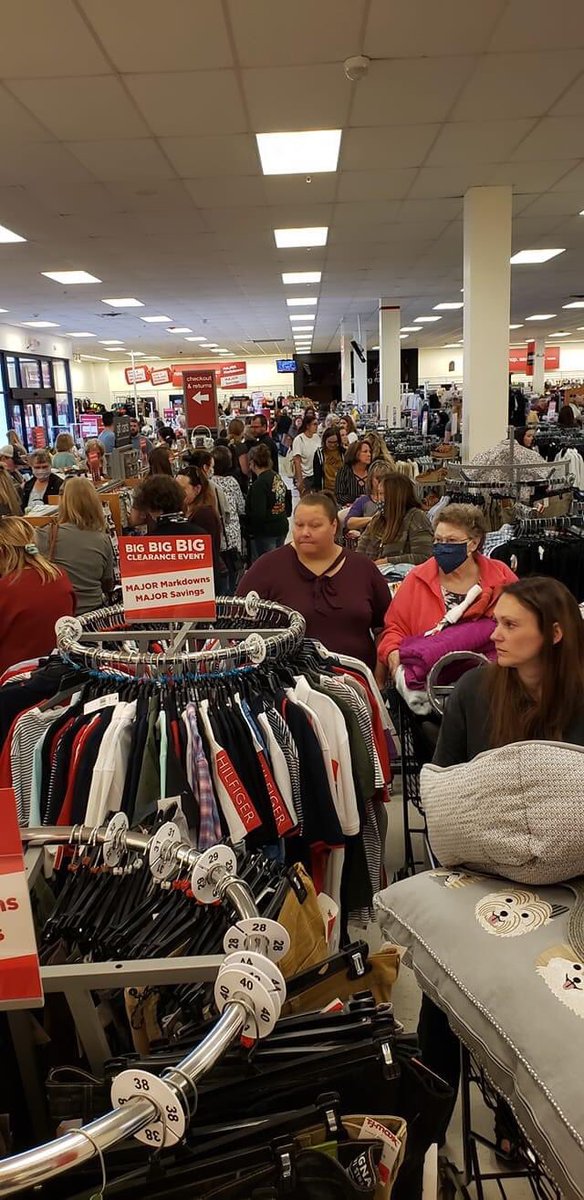
Or public transportation.
Physical contact in public will become the new political correctness. Even years from now, people will hesitate to hug or shake hands in public or on camera out of "correctness" and fear of triggering or offending someone. Never fly without cough drops again; cough and you may find yourself booted from the flight.
I'll exercise extra caution and wash hands more frequently, but I will be high-fiving, hugging, and chest bumping my friends every time VT wins a football game on their way to a national championship in 2021. I will be taking my kids to Hokie games and we will be screaming and jumping to Enter Sandman. If VT/ACC decides not to play football or to not let fans attend; then we may move our fandom to the SEC (and that is not soemthing I want to do).
Or you know, out of fear of transmission of disease?
And you know, of course, there will be those that go out of their way to shake hands or hug just to piss off the Non Contact PC People.
Edit: The "PC" was in reference to people thinking that virus avoidance is just being PC. You know, the people that think this is just the flu.
You don't need the PC in there.
I continue to fail to understand how trying to avoid illness is "politically correct".
It isn't.
It's just that we've shaken hands and hugged for centuries. Why stop over a new coronavirus? Just wash your hands before touching your face. (By the way, Dr. Fauci, the no-hand shake master, is cool with casual sex on the interwebz hookups.)
With that being said, if not shaking hands, not hugging, and wearing a mask outside by yourself on a beautiful summer day makes you feel better, I'm not going to shame you. Hopefully that's a two-way street in the land of the free.
Can't tell if this is sarcasm or not. But why someone would temporarily stop shaking hands during a pandemic of a particularly virulent virus seems pretty obvious. Especially given that much of the transmission is through presymptomatic or asymptomatic people.
People wearing masks outside are doing it as a courtesy for their community. They don't deserve to be shamed. I'm not saying that I'd shame you for not wearing a mask on the street, but I'd give you a wide berth.
Actually Fauci advises that handshaking never should occur again. Ever.
And yes.. I said no one should be shamed for their personal germ fighting choices. If you give me a wide berth on the street, I'm going to give you a wide smile, just like I do when I greet everyone on the street. wide or close berth.
Yeah, I was watching when he said that.
But how is anybody going to see that through your mask?
Let's just cut this tangent of discussion off. This is not informative or beneficial to TKP and has a decent chance of inciting some avoidable division amongst members.
Wow.
I could never transfer my fandom. I was LITERALLY born a Hokie.
However, if the SEC plays football and nobody else does I'll buy a ticket, go to a game, and buy something while I'm there.
Now, with THAT being said, I still think we're going to have football this year for the most part. I think the hand wringing currently is just that. The world is going to look a lot different on 6/13/20 than it does today. And that look will be more pro-football than con.
My wife and I will plan to do the same and hit a game or 2 down south. Would love to see some Sec football this fall.
Ya know we went to Gatlinburg last weekend and I got to thinking. The only way I'd ever attend an SEC game was if Tech played Tennessee in Knoxville. Considering that may never happen with how Tennessee dodges us (outside of Bristol), I'd say I'm good.
Is there any specific reason at this time to get the IgG test other than to just know if you had it, or if you're planning to donate blood/plasma as a recovered person with antibodies? Is there a coordinated study yet nationwide to collect this data? Because if not it just seems pointless to do the test as all it would tell you was that you had COVID. We still don't know if the antibodies mean you are immune.
We don't know for sure, but the all signs are currently pointing towards antibodies giving you some level of immunity. The biggest question right now is the duration of immunity.
Some people believe that we could live in a world where those with immunity have a bunch of economic advantages. Imagine that if you wanted to eat at a restaurant, you had to show a QR code proving you had immunity. Or to apply for a certain job, you had to prove immunity, etc.
Edit: here's the episode of The NYT Daily that discusses the advantages people who prove immunity could get, and a quick excerpt from the pod:
Michael Barbaro (interviewer):
Donald G. Mcneil Jr (health/science reporter who has covered multiple outbreaks):
It's a very black-mirror-y reality. I honestly think that, for those of use who are under 40 and have no pre-existing conditions, that things will get back to normal before it gets to the point that where we live in a dystopian society, but who knows.
This is certainly a viable concern.
(Not starting a fight, pointing out an accepted truth at the legislated level.)
In any place that it is deemed difficult enough to obtain state approved ID to require for voting, imagine the unequal difficulties in acquiring the ID to prove immunity. etc.
ACLU will never allow that to happen.
Not a lawyer, but I did recently take a business ethics course 🙂
My understanding is that the civil rights act of 1964 protects from discrimination against Race, Color, Religion, Sex, National origin, Age, Disability and genetic information. I don't think it's illegal to discriminate based on a non-genetic medical condition. In my quite uneducated legal opinion, the ACLU would have to prove that said discrimination was in fact a veiled attempt to discriminate based on race, sex, etc.
Lawyers of TKP - what say you?
Disabilities act.
I bet this would be quickly litigated as a disability and so the denial of access to public spaces due to medical blah, blah, blah.
Along with what Egbert said, with how horribly "genetic information" is defined across various acts and statutes there could be some wiggle room there. Plus if it really came down to that level of needing to show an ID to eat at a restaurant, any legislature could easily pass a "no Covid 19 discrimination act"
I just wanna congratulate all you magnificent bastards for keeping this thread alive for an entire week without giving cause for discussion thread X!
Challenge Acce-
wait.....
I was just sitting in on a meeting with upper management regarding steps need to be taken in order for the workplace to come back into the corporate offices and....
So one of the major sticking points toward being able to do all of this is to keep proper social distancing practices at all times in the office. This means that you need to stay 6 ft away from everyone at all times. Which means that you cannot have 2 people riding the elevator at the same time, or really passing each other on the stairs.
That part alone is why this is going to take so long to get everyone back.
Or that part alone is why recommendations to keep social distancing into next year or 2022 are untenable.
Or at the very least make living in a big city a complete nightmare for the foreseeable future
there will likely be some compromise involving PPE
Also depends on us having proper PPE for what is needed. Read a story yesterday of a nurse in LA who went to treat a 'code blue' patient with COVID who was only wearing a surgical mask rather than a N95 one... Caught it, and just died 14 days later.
If we are going to need N95 masks as part of that to actually be safe, then we really need to ramp up production ASAP.
I don't think N95 masks are going to be required. There are an infinite number of ways that the nurse could have gotten COVID from treating that patient (particularly if she was not wearing a face shield or additional PPE) or even through another source.
Proper precautions do have to be taken which might include temperature screening, masks and a survey (that is what my company is doing). If jobs can't be done while mainitaining social distancing, eye protection is also required (either a face shield or safety glasses.)
do you work with actively sick COVID patients? proper PPE is based on the situation. Basic cloth masks would be appropriate. Contact tracing to prevent those from entering the workplace when potentially exposed plus cloth masks would be ideal. Testing those for active virus that have experienced a potential exposure would be the utmost ideal.
Contract tracing, of course, would need to be provided by the local government or a contractor. Testing,could be provided by employer.
Until the lawsuit hits, that is. You know there are lawyers already out there ready to file class action suits against companies who force their employees back without providing the top PPE out there.
Can't worry about that. There is a lawyer ready to sue you for something around every corner. How would a lawyer call an expert witness on something we cant get experts to agree on.
You just answered your own question. Don't need expert opinion agreement. Just paid expert opinion. I'm sure you can find a person with a science and geology degree that will testify in court that the earth is flat.
Yes but it is normally "Industry Standard" which is the modern level of safety requirement, not max level possible.
Of course I do expect to see advocacy groups form legal coalitions in order to use courts as a way to force issues they cannot move through the ballot box.
Yes. Legally, you are required to provide an industry standard (and not more) based on a cost-benefit analysis. This is well established law from the days of Learned Hand. The industry standard is pretty much what the gov't will say it is at this time.
And yes, there will always be people with a mission to create law via the court system. In most instances, these pushes are based on opinion (typically political -- think gay marriage and abortion; those are the most prominent examples of laws being formed through the courts via organized political agenda).
Legal safe haven from COVID lawsuits has to a part of the "new normal" architecture. If a business has CDC recommended protocols in place, and a patron or employee catches a virus, there can't be a lawsuit. That would be taking a flame thrower to the tort system. Please let there be sane law makers logged into TKP. Please. You can't escape microbes.
Personally, I think the tort system could use a flame thrower, but from the opposite direction. Too many ridiculous lawsuits as it is.
Yessiree.
Presumably the patient wasn't wearing any kind of protective equipment at the time, and the room/surfaces in the room were lousy with virus. A contained room with an active patient with no mitigating equipment on seems like maybe the literal worst environment to enter, and that basing our collective response around "What would work here?" might not be necessary.
Plus everyone would need to shave their quarantine beards to properly wear the N95s, which seems like a bridge too far, TBH.
Viral load inhalation for this particular situation was probably enormous.
Interesting article from ESPN about the NFL's return
Fauci Talks NFL Season
It's going to come down to testing - How fast, How accurate, How reliable
If we look at how we as a society have responded to the outbreak this spring as an example, fall sports are doomed.
Let's say we 100% quarantined, that would mean that, as a potential, we still had 100% risked population.
The opportunity for crippling outbreak has not been mitigated and the opportunity to overwhelm health care resources is only decreased by the amount of increased unused hospital and health care equipment and commodity resources gained/lossed. As an additional very significant concern is the ability of the populace to withstand additional loss of "necessary for life and mental health resources", for instance, food, fuel, clean water and medicine as well as treasure to invest in research. With 100% quarantine, nearly no food production or research can occur as well and maintenance activities.
With the other extreme where there has been 100% exposure. This decreases the probability to near 0% that there will be a near future debilitating outbreak will occur with the assumption that at least some . Surviving populace has many concerns, research and food production, maintenance activities have continued apace based on the debilitation to the human populace.
We are somewhere in the middle. We have exposed the populace due to a partial quarantine and thus a certain unknown percentage have achieved what is probably at least a short term invulnerability to the virus.
We have not decimated the stock of food and medical supplies and resources are excellent. We have identified weak spots that needed shored up, namely transportation of goods and logistics to get foodstuffs to market. We have made significant research and production capability for medical supplies and equipment. We have also identified a difference in actions that our governments can take and medical strategies.
Overall, I think we are in a good shape with the way forward to be to make smart, smooth and selected openings of the economy to spread the resource burden out further and keep the society together. This will give the medical community more breathing room for research and discovery, also the government more time to make careful reopening steps.
Besides within the Oval Office, I have not seen evidence of appropriate testing and contact tracing procedures. The reason Fauci, VP, POTUS and others in the Office can continue to work is that they're being tested daily after being contact traced. Is that happening anywhere else? I don't see it, but perhaps it's happening on a more nationwide scale than I can see.
With that said, it seems some states are at least trying to establish good measures to move forward. Testing is getting much better. Contact tracing isn't quite there though.
appropriate testing and contact tracing procedures
Can you elaborate on specifically what this looks like and what we are trying to achieve by it? There is a lot of open ended language being used that doesn't define any clear objective.
With anywhere from 50%-80% of covid-19 cases being asymptomatic it is unclear to me what the efficacy of contract tracing will be and what testing strategy would be advisable.
I think the 80% number is pretty well debunked by now, with most experts agreeing that somewhere around 50% are asymptomatic or symptoms are extremely mild. Which is still a LOT and would make contact tracing very difficult.
Edit. I just saw a pre-print that suggests 68% of transmissions are from presymptomatic or asymptomatic people. Not surprising (if you have symptoms it's much less likely you'll be around anyone else), but more evidence that contact tracing will be nearly impossible.
you don't need 100% of people infected to contact-trace back to finding the asymptomatic. You just need enough symptomatic cases and 50% is way more than enough, assuming contact tracing has enough resources.
And if you're looking for evidence that contact tracing works for something like coronavirus, we have proof within the current pandemic. Look at the countries in Asia. They have much less restrictions at the moment due to their ability to contract trace, properly social distance, and embrace the idea of wearing PPE.
I can't wrap my head around how many resources it would take to effectively do that.
It would make sense to learn from those doing it the best. Seems like it would be in each state's best interest to learn how Korea, Singapore, Japan, and Taiwan are doing it.
As a nation, we're showing that we are not leaders in public health response to a respiratory virus pandemic. It is rather humbling, especially considering we are the number one country in research and public health knowledge.
Can we with any accuracy quantify the benefits of contact tracing? There were numerous factors (culture, collectivist mentality, recency of experience with MERS in 2015, geography, etc) that played a role beyond testing and tracing so it is unclear of the degree to which these procedures helped. I think we can all agree they did help but are they 25% responsible for the success, 50%, 75%, 90%? The reason this is important is we need to identify what they have done that can be replicated here. Of the factors that lead to success, only testing and tracing can really be adopted here because the rest are cultural and experiential. Even testing and tracing is a stretch due to the vast difference in size of the country by land mass and population and the importance of privacy and autonomy within out culture. I may seem like I am coming off as nit-picky but I assure you I am asking these questions in good faith.
This may seem asinine to some people and selfish to others but being number one in controlling a respiratory virus pandemic may not be a trade-off many people are willing to take if it means surrendering too much of the autonomy that they still have over their lives.
Yes, a cost benefit analysis of contact tracing in isolation would be nice. It won't exist, as actually quantifying the solitary benefit of contact tracing isn't and won't be available. Korea and Singapore, however, relied on contact tracing as their primary tool to contain the virus. The bottom line is that it works and works effectively if in place.
Korea is playing baseball right now, which still seems very difficult for US right now. Why can they play? I think it's due to their abilty to contact trace with lots of testing. PPE and social distancing aren't really effective when you are sharing locker rooms and playing a different team every 3rd day.
We have a lot of unemployed people (bc of the virus) that could easily be taught to do the work.
California is trying to hire 20K individuals: Link
It's estimated (sure yes, another model) that 30 contact tracers would be needed for every 100,000 citizens. That would be 12,000 individuals in California.
yea. the goal is understanding where transmission is occurring. So, when we get a confirmed case, we can trace back the last few days of that person's activity and see if we can determine (a) a common source that lead to infection (for example, if 3 people that all were in the grocery store that saw the same cashier ended up with symptoms, that cashier, even if asymptomatic, should be tested) and (b) who else you were in contact with to whom you may have passed on the virus to get them tested. Those at risk of being infected should stay home (or get tested daily) for 2 weeks.
The knowledge of transmission sources (i.e., those that have confirmed infected) and potential future sources (i.e., those that have been contacted) yields an ability to use a very nuanced and isolated way to control the virus. As Leonard correctly pointed out earlier, a scapel is better than sledgehammer. It is of my opinion that we can't effectively use a scapel if we can't even see where transmission is occurring.
I have not seen much contact tracing with the exception of specific instances such as early cases that appeared within the U.S. and instances within the military and west coast nursing homes.
and the entire nation of south korea
Well yeah, but there's quite a bit of difference between doing this with the USA and South Korea, which is 1/6.5 population of the US and the size of Indiana.
South Korea is highly militarized (in comparison) and much more densely populated.
The testing just isn't accurate enough for me to support universal or widespread testing. Only get tested if symptomatic. The tests currently are 70% accurate. So if you're asymptomatic, what value does a test really have. A positive tells you that you have slightly more than a 50-50 chance of being infected. Okay, no thanks.
A friend that works at a hospital says their hospital never uses the rapid flu test because it is only 94% accurate. That standard has been significantly reduced simply because the best covid tests are still only 70% accurate. Testing needs to be readily available for those with symptoms. Beyond that, I don't see the benefit.
Curious where you're getting the 70% accuracy number from.
I have no idea where you are getting that 70% number, but we do have evidence of widespread testing and contact tracing being wildly effective in South Korea in comparison to the way this has been handled in basically every western country.
I believe New Zealand did similar measures as well with great results.
If people are interested, here is a link to the reported sensitivity and specificity ratings of some of the antibody tests. Most have not been independently confirmed and the article is from last month, so numbers may have changed. But you can get a rough idea of things - including the odds of actually having or not having been exposed based on the estimated incidence rate at the time. Again, not fully up-to-date and we don't know the actual infection rate. Probably won't for a long time. But can get a general feel for things.
https://www.evaluate.com/vantage/articles/analysis/spotlight/covid-19-an...
i wish that had the Quest Diagnostics anitbody test included. got stuck yesterday for it, will have results this week (but I'm checking like every two hours lol)
Is this something that you just purchase directly and pay for out-of-pocket, like an over-the-counter test? Not planning on doing anything, just curious if these tests are essentially direct-to-consumer or if you need a prescription. Guessing you go to their office to test, or is the kit sent to the home, you prick your finger, and send in a sample somehow.
Insurance covers 100% with a doctor's scrip, or you can do direct-to-consumer, schedule the appointment, and go to a test site (for Quest).
I pre-paid online, scheduled online. Got to the test site, scanned a QR code on my phone, verified my address and showed photo ID to the receptionist/nurse, went and got my blood drawn (more like typical bloodwork than a finger prick), and that was that. I showed up at 2:39 for a 2:45 appointment and was back in my car by 2:43.
$130 oop and i didn't need to worry about dealing with doctor's office or insurance to get a prescription -- especially given that my scenario is either "I had it a month before the established timeline" or "I was entirely asymptomatic and had no reason to suspect I was infected"
Okay, thank you. Was curious about how this was being done. Guess it is DTC/pay out-of-pocket option as well as through your HCP and insurance.
Please keep us updated on results (if comfortable obviously).
Negative! I was v curious about the fever I had in February, it was not covid related (NYC area, Jersey side).
The longer this has gone on, everyone in my group at work has basically concluded that I had it and exposed them all and they didn't have any symptoms so they were either asymptomatic (and now immune! according to them) or it's not that big of a deal bc not very contagious or else it would have swept through the building
....well I didn't have it 💁♂️
My coworker (We are a small office of 4 did his testing yesterday). We had no choice but to come to work so I was very interested in his results. He also was negative.
I flew home from Las Vegas the day Rudy Gobert tested positive so I had a bit more exposure than my co workers. It seems as if we avoided.
My mom got Quest anitbody test because she was convinced she had it in late January early February. She too was negative.
dmcross isn't talking about the antibody test. He's talking about the PCR test which is generally known to be very accurate. It grinds my gears when people spew out blatant misinformation.
Yes, widespread testing is for active infection, not whether you have immunity. Much different test as you mention, and very easy to ensure high accuracy and specificity. Also easily reproducible and cheap for result confirmation.
Serological antibody tests are much harder to achieve accuracy and specificity.
I got the 70% as an estimate from a friend in the healthcare industry. And I had heard early on about issues with accuracy. After reading more, the PCR tests do appear to be very accurate. Not as much risk for false positives, but still a risk for false negatives if sample is taken too early during infection period.
It wasn't blatant misinformation. After reading, I can admit the 70% appears to be wrong. I trusted the person I spoke with to be knowledgeable. Maybe they were actually talking about antibody tests, or just plain wrong. No reason for your "gears to grind" when dialog can take place and information be corrected. These dialogues are exactly how we all end up being better informed.
As others are commenting, widespread testing and contact tracing can certainly help reduce the spread. At the same time, there is an argument to be made that false positives and false negatives are always an issue with testing. Especially when testing people who are not showing symptoms. Furthermore, there is a serious legal and privacy issue when it comes to forced testing and forced quarantine for healthy people showing no symptoms. Not trying to get into a debate or even declare which side of this I would be on. I am just presenting some of the clear issues. Not sure we want to go down that road as country of forcing this on people. I do agree that in the case of covid, if you want the test, you should be able to get it.
A test can be decently accurate (say, 90%) and still show a lot of false negatives or positives. I was just reading something yesterday on the Base Rate Fallacy (Wikipedia link), where a low base rate of infection can create huge inaccuracy numbers in testing.
In the example I saw, there was a 5% true base rate of infection (5% of the example population has it) over 500 people. So that would mean 50 people are infected, and 450 people are not. If everybody was tested via a test that has 90% accuracy, you would see numbers like this:
- 45 infected showing true positive
- 5 infected showing false negative
- 405 not infected showing true negative
- 45 not infected showing false positive.
So of the 90 people testing positive, 45 of them are false positives, for a 50% effective accuracy rate. Also, 90 positives in 500 people would seem like 18% of the population is positive, over 3.5 times higher than the actual base infection rate. And this is with a test that is 90% accurate.
So I don't know if that Base Rate Fallacy is what you're referring to, but statistics can do strange things and magnify small percentages sometimes.
And this is exactly the area they were discussing in that link I posted above about the antibody tests. If you assume a low incidence in the population as a whole, broad-based testing will lead to a very high false positive rating unless you have a very specific test. That specificity is what companies are having to strive for as the false negative rate is not so much of a concern in the situation they are talking about.
Can anyone point me to accurate, current information regarding domestic and international travel with regard to self quarantine requirements upon arrival?
Scenario #1: The last week of May, my family leaves Virginia and drives to my mom's in Florida. We don't plan on doing anything other than staying at her house or going surf fishing, which is allowed at the beach where she lives.
Scenario #2: The second week of July, my family leaves Virginia and drives to Hilton Head for a week long stay in a rental house. We are met there by my in-laws from Maryland and some other in-laws from Oslo, Norway. We don't plan on doing anything except staying at the house, possibly getting take out food a few times, and going to the beach.
In both situations, we realize the typical tourist vacation activities are a no go.
I'd like to know if there are any laws that would require us to self quarantine for 14 days upon arrival in those locations, thereby preventing us from doing anything while there, even if it's just fishing on the beach.
I realize the group from Norway has their own situation to figure out when they go home, but I'm only concerned with what is required when they arrive here.
I'm trying to coordinate this so we can decide how to plan (cancel everything, cancel the Norway group and split their cost amongst the rest of our party, etc.).
Thanks.
Domestic requirements are probably state by state. Incoming into US will be DHS/US Customs. I've been trying to find a link for you, but in typical government fashion, it is not easy to find. I'd recommend having them (or you) calling the State Dept. and ask if they'll be allowed to enter the country. This looks like as of now they would not be able to enter the US. Link
I also don't have the answers, but I think the issue you're going to run into is constantly changing regulations which will make it very hard to plan for international travel. I think airlines are still offering to rebook for free if that helps out to your family in Norway.
Earlier both SC and FLA had a 14 day quarantine requirement for people coming from out of state or certain areas. SC was if you came from a "hotspot". FLA was I think just from out of state. You should probably check each state's government website to see what the restrictions currently are when you are ready to travel.
florida
https://floridahealthcovid19.gov/travelers/
Florida Dept of Health has a comprehensive page...the link above is one part of it
Thank you. Looks like leg one of summer 2020 surf fishing is a green light. Appreciate the info.
Thanks everyone who commented. I'll do some digging. Sounds like the Florida trip is fine. SC might be fine for us, but not looking great for the group from Norway.
The county in IL where I work just voted to reopen despite stay-at-home orders. There's some pretty solid language in the guidelines the county put forward, such as:
I am on a conference call right now with the Virginia Dep of Health.
I am learning that Virginia is doing contact tracing and that they are currently hiring. I was unaware of that.
About 1200 people to do the tracking and about 100 to supervise and manage data.
If you would like to apply, go to the Virginia Dept of Health website.
VDH has been doing contact tracing since mid march. My aunt and uncle went under 14 day quarantine due to possible exposure. Lady they had contact with went to the hospital 4 days after they were together.
I knew they had been doing some because my wife was informed that if any of her patients presented with a probable that she would be informed as immediately as possible.
I did not know that the contact tracing was as routine as the VADH rep presented.
Some good news this morning. My favorite place in the whole world to visit is partly opening up. Not that I'm anywhere near or plan to go soon, but was good to hear. Now if only a barber shop around here was open I'd really be happy. Looking like Gene Wilder in Young Frankenstein these days.
Grand Teton National Park Announces Increased Recreational Access
Following guidance from the White House, Centers for Disease Control and Prevention (CDC), and state and local public health authorities, Grand Teton National Park is increasing recreational access and some limited visitor services.
Beginning Monday, May 18, Grand Teton National Park will have recreational access with limited services available to the public, including;
* Primary road access (Teton Park Road, Moose-Wilson Road and North Park Road)
* Public restrooms in some areas
* Day-use hiking on seasonally-accessible trails
* Riverbank and lakeshore fishing
* Multi-use pathway system (where free from snow)
* Limited commercial-use authorization tours (biking, wildlife, etc.)
* Several viewpoints continue to be accessible along US Highway 89/26/191
Similar partial reopening is set for Yellowstone on May 18 as well.
Yellowstone has outlined a three-phased plan that initially opens the South and East entrances of Wyoming and limits visitor travel to the lower loop of the park. The lower loop allows visitors to access Lake, Canyon, Norris, Old Faithful, West Thumb, and Grant Village.
If people want more details on Grand Teton and Yellowstone, link below:
https://www.eastidahonews.com/2020/05/grand-teton-national-park-starts-t...
Woment Burned Sneaking Into Yellowstone
My brother and I booked last week for late August!!!!!!!!
Are there any teachers on here? And if so, how are y'all balancing the movement to online learning with the fact that online learning unequivocally sucks and everyone hates it?
Not a teacher, but a parent of one in elementary school. Yeah, it is not great. I wish they had a lot more classes or discussions online. My daughter's school normally has 1 or, at most, 2 hours of actual online learning. Subject matter changes. Most often it is math or science, but not always. If it is band day, then she gets 1.5 hours of that online in the evening. Most of what she does during the day is reading and doing assignments that would probably have been homework in a normal situation.
Her best friend at her summer camp gets something like 4 hours every day and it can be more. Much more involved with the teachers. Of course, tuition where her friend goes is the same as what VT charges for tuition for out-of-state students, so Jade's school should be giving more!!!!!
I have done a large amount of online learning and I don't hate it.
Nice cup of coffee and comfy clothes beats a commute and a professor that wanders in their lectures and spouts politics when the topic is supposed to be microbiology.
Edit: My daughters have online classes as well. They ar in class about 50% of the day and have assignments and projects. My youngest one is learning how to organize so she gets all of her stuff done.
they like it and sometimes thrive but miss all their friends.
.....not sure if distance learning class or tkp coronavirus thread.....
This really depends on the student, teacher, material and subject.
If the course work is designed well and not, you know, thrown together in a hurry with no planning or consideration for all the complications, it can work very well. (This is not a criticism of people who had to do this, everyone was making it up as they were going along).
I would expect that a teach who had to teach the back half of a semester on no notice would be able to put together a better class with a few months to plan.
Now that we have virtual classes going at work, some of our customers are indicating it as preferred to the traditional classroom variety.
Yes totally agree - and understand - about them having to pull this together on-the-fly. If this is still going on next fall (God I hope not) I'm sure that the school/teachers will do a much better job of having actual online learning. They were put in a tough position and are probably doing as well as can be. Just wish it was more than 1 class a day that was a live discussion + 1.5 hours of band practice once a week. Already moving that way as we are getting more 2 classes a day online now.
On the distance learning front, now I'm curious about what others are getting for their kids in elementary school or middle school. Say grades 3-8. Mine is in 5th and this is what she is getting now in terms of online classes and instruction.
Every day she has math, except on a day that they have a math test.
Twice a week has science.
Once a week has some other class.
Band practice is once a week in the early evening.
Ok here is 1st graders work for today:

3rd graded has similar she also had two separate zoom meetings and a zoom office hours along with reading a chapter of Charlottes Web.
Charlotte's (World Wide) Web
Thank you. She gets an assignment page like that too. Not so many videos to watch, but there are normally a variety of those too. Should have mentioned that part. Most often they are science. They seem especially big on space science.
WVU's President Gordon Gee just said that there will be football in the fall. WVU has already stated their intentions on being in class for the fall semester, so it looks like the Big 12 is a go.
haha very clever and gets the message across perfectly.
So we wear masks on our junk?\s
Don't kink-shame me!
Also, don't pee on people.
You know who you are.
Pee is actually cleaner than the sneezing and coughing and normal droplets of fluid that escape us walking around.
Yes, it is usually sterile. If not, you have a urinary tract infection.
Edit: please note, that I am not, in any way, actually suggesting that it is okay to pee on people though!
The pee is sterile is old medical thinking. All healthy bodies have organisms and bacteria in them many of them important for us.
Where did you hear that? You might be totally right. I'd just always heard that what was in the bladder was clean. But maybe that is not correct.
Edit, just looked it up and did find articles saying both sterile and non-sterile, but it does seem that the more recent ones say not. Just that healthy people do not have pathogenic organisms. Wonder if the old thought was just that nobody was trying to culture microbes unless they suspected an infection?
https://www.ncbi.nlm.nih.gov/pmc/articles/PMC3957746/
https://www.smithsonianmag.com/smart-news/turns-out-urine-isnt-actually-...
Thanks. Definitely is new from when I was in school. In fact, I found an AUA forum from 2019 that was commenting how urologists still had this view. Learn something every day - leg up.
I used to sneeze on my little brother on purpose when we were kids. He still holds it against me.
After you sneeze on him, he hugs you to rub the sneeze on you?
Yeah but outside, the expression "pissing in the wind" comes into play.
And... does anybody cough and sneeze on each other? I mean... really? If you cough or sneeze on somebody you deserve an ass stomping on general principles.
It's all about fomites. Coughing and sneexing on surfaces, touching said surfaces and then touching your face.
I saw this at Food Lion on Monday... Guy in a mask is browsing the soup aisle. He pulls down his mask and vigorously wipes his nose, then picks up a can of soup. Reads the can, then puts it back on the shelf. A mask ain't helping no goddamm body right there. If anything, if he wasn't wearing a mask, he might not have had an itchy nose.
Just saying.
Nobody coughs or sneezes on each other on purpose, but they don't need to. A single cough releases about 3,000 droplets and droplets travels at 50 miles per, most drop quickly, but they can travel across a room. A single sneeze releases about 30,000 droplets, with droplets traveling at up to 200 miles per hour, which easily travel across a room. Each droplet from an infected person contains millions of virus particles. Coughing into your elbow does not stop all of that.
Just wear a damn mask. It's literally the least you can do and not doing so just proves how incredibly selfish you are. And sure, if you're removing your mask and itching your nose, it defeats the purpose, so don't do that. Easy, problem solved.
No comment. I like thread IX. Good day sir.
Do yourself (and everyone around you) a favor and read through this. It's clear, easy to read, and every claim is sourced. Wearing masks helps stop the spread of the virus. Full stop.
https://theconversation.com/masks-help-stop-the-spread-of-coronavirus-the-science-is-simple-and-im-one-of-100-experts-urging-governors-to-require-public-mask-wearing-138507
I'm not entirely anti-mask. I'll wear a mask if...
a) A business that I wish to patronize, or one of my customer's facilities has a mask requirement.
b) If I'm in someone's home as a guest, and they ask that I wear a mask.
c) These executive orders are lifted and everybody's allowed to re-open on the condition that we wear masks. (A guy can compromise.) I'll make a cool maroon and orange one for the Penn State game if played as scheduled with fans and it's a requirement.
d) I'm inside a nursing home or a hospital.
I appreciate your sharing these articles from the experts to support your arguments. I just happen to believe it's overkill for the most part. And no, it's not like being anti-seat belt (to whoever said that.) You will be thrown from your car in a serious accident while not wearing one. If I cough or sneeze at the floor, your shoes might get a coronavirus on them if I have a coronavirus, along with the dog poop and other gross stuff.
It seems like the main point of your argument is asymptomatic spread. There is data coming out that asymptomatic carriers shed very little virus while infected anyway. KIds 0-18 literally do not pass it along to adults as studies are indicating. Most if not all of your studies speak to the transmission through coughing or sneezing. If I'm asymptomatic, that means I'm not coughing or sneezing...Right? If I am symptomatic, I'm going to stay home away from others.
Again, wear your mask. We're cool. I'm not going to judge or shame.
Ok, I'm going to say this in general...not directionally.
There is a fundamental issue with what you said. And it's prevalent around the country today. "I believe." What you believe doesn't have anything to do with science. Or other people. Or the guidelines. What you believe should play zero into the decision.
If you sneeze the virus, if you have it, can spread and live on whatever surface and propagate from there. If that person gets sick, well, you're back in the same situation as the seat belt...in the hospital using resources.
I believe doesn't belong in the discussion.
As far as your data. How do you explain covid toes and the kids getting the kawasaki disease like sickness? There are many things we do not know. You yourself rely on "science" to point to some items, but that's not an end all...but you use it to inform your believe. At one point Hydroxychloroquin was the end-all. At one point April was the end-all. Point is, we are learning more and more EVERY day (whether you hear it on the news or not.)
counterpoint: CDC Link.
So even if you were able to direct your cough/sneeze to the floor, let's follow this train of thought.
Youre infected (unknowingly I would assume). You cough/sneeze at the floor, transmitting virus onto my shoes. I get home, and want to take my shoes off (or need to tie the laces, or whatever). What do I do? I tough my shoes. Now it on my hands, and potentially whatever else I tough, including my face. Now obviously I could wash my hands every time I touch anything, including my shoes, and washing my hands is good practice. But you could have aided in lowering the risk for me by just wearing a mask so the virus doesn't get on my shoes on the first place. It's a belt-and-suspenders solution, not a panacea, but it's better than nothing. Every little bit helps, so I admit it's frustrating when some people seem unwilling to help.
Let me give another example. We just received word that another person at my work (we're an essential business and have remained open) tested positive. We only recently mandated masks be worn at all times after previously having strongly suggested it. Guess what, this person was in the building I was in the day before he tested positive. I saw him in a lengthy conversation with another employee (~30 minutes) on that day. The infected employee wasn't wearing a mask. How do you think the other employee feels right now? He has a family, he didn't know this guy was sick, and now he was exposed with very little protection, all because this guy couldn't be bothered to wear a bit of cloth over his face. Could he still catch it if the other guy wore a mask? Sure. Would it have lowered the chances? Yes. I'm sure if you asked him he would have wished the infected guy was wearing a mask.
I agree. It reminds me in some ways of laws against drinking and driving. They're not really to protect you, if your dumb ass wants to get in a car after you've been drinking, but to protect other people.
Wearing a mask is a very simple, painless way to be considerate for your fellow human beings. It's fascinating to me how some people consider this to be a big ask.
I dislike this meme. I find it contrary to my training with masks from my work in nuclear power and also with the military.
I understand it's sentiment but when I discuss this, I usually get hammered with the normal Internet beat down that happens whenever anyone says things outside the common thinking.
It's not rocket science. And it's not just about the person wearing it. Think seat belts. Just wear the mask when out in public.
I'm not sure what you learned about masks and nuclear power, but give this a read. The evidence that masks help stop the spread of Covid-19 is pretty clear.
https://theconversation.com/masks-help-stop-the-spread-of-coronavirus-the-science-is-simple-and-im-one-of-100-experts-urging-governors-to-require-public-mask-wearing-138507
I agree masks are effective but that is a horrible article to convince anybody. The number of times he uses the words "appears", "seems", "should", "may be", and uncited "experts" is staggering. Again, I am somebody that agrees with the premise already, and it created credibility doubt.
I didn't get that vibe, so I searched through the article.
He mentions "experts" 3 times and all three are followed by citations.
He says "should" 3 times and they were all about how people should wear masks or be required to. Nothing in relation to the evidence or studies
He says "appears" once in his original hypothesis.
He says "seems" once in the conclusion in coloquial phase "seems to me".
He does not say "may be" or "maybe" once.
I find it interesting to see how many different issues this pandemic has brought to the surface of our thinking and discourse. It is equally interesting to me to see where people land on some of these issues.
India is mandating that people download and use a coronavirus tracking app, and in some cities there are fines and threat of arrest if citizens do not download and install it on their phones. Link to article
Thoughts on this? Would something like this work here where contact tracing seems to be lacking?
Some people won't wear a piece of cloth over their nose and mouth because of "freedom". I have to think a mandatory tracking app on your phone would also not go over well.
The problem is there is no trust in the government (or business) not to mis-use the data for other purposes.
The problem is that America is a free country... or has been for the most part. Government mandated masks and phone tracking is not freedom. Freedom is why we don't speak Japanese or have a dictator like Castro. Freedom has allowed unprecedented innovation in America- The moon walk, countless medicines, technology's, the modern car, etc. Look at the big picture. What makes America, America is not the iphone or facebook or bacon cheeseburgers or the Super Bowl or Michael Jordan. It's freedom. In this case, let a governor run for public office on mandatory masks everywhere. If he gets elected fairly, then we wear masks in that state as a law. Simple. If congress and the POTUS put up a law for open government tracking of cell phone records and locations- against the law today- if that law gets passed - we have our phones tracked. That's our system of government. My problem is not wearing a mask, my problem is with executive overreach and sidestepping our democratic process.
You also do NOT have the freedom to infect others and take away their freedom to living.
See shouting FIRE in a theater.
I don't think saying "you can't shout fire" is a legitimate approach to arguing your point against his. It's not the same issue. You can say it is all you want, but it isn't.
Where do you stand? Government over reach to the point of mandating what apps you have on your phone, and what they can do with that data. Ok, or not?
I'm of the opinion that we should take responsibility for doing what is right (wear a mask, or whatever else you think you need to do). But I won't for a second agree that a government mandate to download an app and let them track me is acceptable, I don't care if it's the zombie apocalypse virus, some lines shouldn't be crossed.
The point is you cannot simply just do what you want and say "I'm free and have that freedom."
There is a culture of mistrust and abuse of power in this country. Which comes back first...the trust or the ability to actually use it properly? If you could GUARANTEE the tracking was simply tracking for the virus, then go for it. But people don't trust it, and others would find a way to abuse it once it's outlived it's intended purpose. For that reason it will never fly.
And I have extremely little faith that the right thing will be done across the board. See the security guard that was shot dead because he told someone to put a mask on to enter a Dollar General. The fact that Dollar General needs a security guard is disturbing. The fact that adults need to be told to wear a mask to enter a store is disturbing on many levels. but the fact that he was killed because of what they believe (or don't) is the most disturbing and disgusting part of humanity in our country.
This can go down a lot of different paths and this comment treads very close to the line of CGs
pls, nobody else step over that line
The government mandates all sorts of things for the greater good of the population. See:
- Smoking/drinking ages
- laws restricting impaired driving
- vehicle safety regulations
- environmental protection controls
- drivers licensing
- mandatory drivers insurance
And a million other examples. The idea that the government can't tell you what to do to protect the population is laughable.
I think the issues are different. Those items are typically governing privileges not rights. I believe we have a right to not be tracked by the government if we've committed no crime. You may feel differently.
but certainly you can agree that mandated location tracking of individuals is a little bit different than "pls prove you know how to safely operate that car before we let you operate that car with zero oversight"
Consider the logic of your argument:
Government is solely tasked with determining what the great good is.
Because only government is the arbiter of the greater good, there is no limit to what they can do to carry out their own self determined greater good.
yes, we won WWII because of every soldier used their free will to fight and not due to draft. And yes, free will prevented Cuba from taking over US.
So I'm gonna shock the world here, but there are some of us who have avoided addiction to that little flat piece of plastic. Would "they" be willing to give me a nice new cell phone (as opposed to, you know, a real phone you plug into the wall like we have here) so I can turn it off and put it on the shelf like I do my Tracfone? Unless I'm heading out on the water in my own boat or unless I'm on a road trip, a cell phone is the last thing I think about having with me, and even then, it's turned off unless I have trouble and need to call for help.
No thanks.
it'd never fly
I agree. And I don't think it should.