
Rule Changes for the 2023 College Football Season
Goals:
1. Keep the game moving (pace of play, reduce the number of plays per game).
2. Ensure consistency in officiating the game clock.
Changes (my summary):
1. Still 3 timeouts allowed per half, but consecutive timeouts will no longer be allowed by a team in any individual dead ball period.
2. Game Stop for replay review only occurs for Targeting Fouls or head coach challenge.
3. The clock will no longer be stopped to award a first down except with less than two minutes remaining in the 2nd and 4th quarters.
4. A period shall be extended only during 2nd or 4th quarter, and only for live-ball foul, offsetting fouls, or an inadvertent whistle. The 1st and 3rd quarters will not be extended (penalty enforcement will be carried over to the following quarter).
5. Instant replay without a booth is now permissible.
6. Halftime warmup rules.
7. Over the field drone activity rules.

Comments
Am I reading #2 correctly that they will essentially be using NFL rules for reviews? No 30 reviews a game?
Will every scoring play still be automatically reviewed?
Based on #2 I'm not sure how the ACC Officials are going to make it...
Also I saw a punter becomes a ball carrier if they move more than 5 yards from where they are when the ball is snapped. so if a snap goes over the punters head they can be hit while trying to get a kick off
Please God let us hope we have figured our long snapping out.
TBF, I would be hoping for that whether the rule changed or not.
True.
I'm surprised we're not working on our long snapping right now.
this also addresses rugby-style punters that take 7 steps to the side before firing one off.
Phrasing?!
It's actually only backwards, rugby style punters are still protected if they stay in the tackle box and have always been considered runners is they leave the box
Big fan of #1, dislike #3, not informed enough about the rest to have a strong opinion.
The one thing that irritates me: if you want to pace of game to feel better, then just have less commercials. Pace of play wasn't an issue 10-15 years ago. No one (to my knowledge) was complaining about how the clock stopping on first downs damaged the 'pace of play'
Since I know no network is going to ditch commercials, I am a big fan of picture-in-picture ads during huddles and referee nonsense to keep the game going and limit TV timeouts.
I cannot stand TD, commercial, kickoff, commercial segments. Drives me nuts.
I hate commercial breaks after turnovers. To me, it negates the momentum for the team that just gained possession. Probably not true, but it feels like to me it always happened to VT. We get a big momentum shifting turnover. Rather than the offense getting right on the field and forcing the other defense into a quick change, we have to stand in a huddle on the sidelines or on the field in formation for a 2.5 to 3 minute commercial break.
For what it's worth, in-game momentum isn't a real thing.
Has nothing to do with momentum, and everything to do with the VT offense repeatedly being doodoo.
Blasphemy!
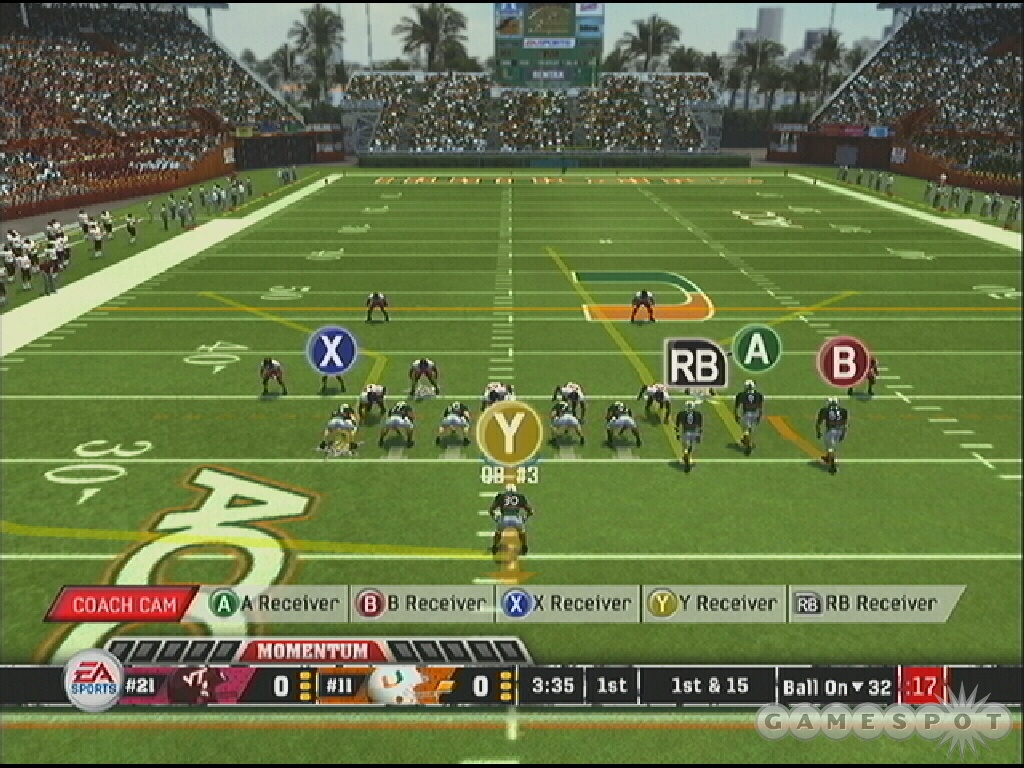
Probably because they have a TV timeout and kills the momentum
I agree with you on 1 and 3.
I don't think 2 is a good change unless they are saying a TD is a game stop. With #3 this means first down is never reviewed cause either no long stops clock/play? I know the official reviews took long but the ACC refs are sooo bad that the games are just going to piss people off.
I have zero issue with #4 as this eliminates only a hand full of plays a year. Though it doesn't say anything about OT so I assuming that's still good.
When I hear anyone argue about the game length it is one thing and one thing only, commercials (except the Nebraska fans I knew in 2001 that were complaining how long games witha forward pass would take vs their option offense). Looking over the past number of years back to 2004, the number if plays is about the same as 2004, it dipped a couple of plays per team per game in the 2010/2011 time frame but we're talking about 4 whole plays. Is someone really saying they need to cut out 3 minutes of game time in a 3.5 hour game?
It seems like the actual "is it past the sticks" is a good candidate for "things we could use computers and cameras to determine". Kinda like how the broadcasters can show an ump's strike zone percentages nowadays.
oh yeah, this should be the solution and should have been implemented 5+ years ago.
It's actually funny you say that, because there were a series of rule changes circa 2006-2008 that specifically dealt with game length.
Changes in 2006 . . .
Changes in 2007 . . .
And in 2008 . . .
The main reason most fans have an issue with game length is when games run over and you're forced to find another channel or streaming app to watch the beginning of the next game. But that falls on ESPN to stop trying to force college games into a strict 3 hour window. They should have a minimum of 3.5 hours between kickoffs of back-to-back games on the same channel. (I'm looking at you, ACCN quadruple headers that start at 11 am.)
I believe the thing with commercials is that there's a set amount for each game. So it's really a balancing act -- do you go for a lot of short breaks, or fewer breaks that are longer?
Thanks for sharing!
I'm a cordcutter, so maybe that biases my view, but I don't think this is the issue. People don't like start/stop, and they don't like not knowing how long a game will last.
Or do you just have less commercials, limit supply, increase demand, thus charging more, while also making it a better product for fans?
I'm not an expert on cfb clock rules, but I can't imagine halftime was extended for any reason other than to fit more commercials.
Also worth mentioning that I think fan perceptions are skewed due to playoff/title games. I don't understand how/why the national championship has to be on from 8pm to 12am on a weeknight (well, I know why - because CFB is afraid to compete with the NFL), but I digress,
Cordcutting really has nothing to do with this. If you're streaming through a service like YouTubeTV, then you're viewing experience is still very much like me watching the game on Fios cable. The only difference is which wires the broadcast is coming from.
And if we're looking at it from the perspective of streaming through the ESPN app, they run their streams based on channel, not on event. (Obviously, not talking about online-only games here.) So if there's a game that gets bumped to a different channel because the previous game is running long, there's no option for anyone to watch the entire game in one stream or viewing without having to change the stream or channel when they push the game back to the original channel.
Well, part of that is just the basic nature of a live event. But most people should understand that the accepted basic timeframe is 3-3.5 hours for a football game, with the potential to go longer based on certain game factors (injuries, overtime, weather, etc.).
I'm not really disagreeing with you on this point, but I don't think that's quite how commercials work, and we all know that any discussion of this type is a non-starter because the networks aren't going to be decreasing ad time for the sake of a better fan product.
(And to be grammatically correct, it would be fewer commercials...)
Yes, this is a major problem. Technically, two problems. They could probably get the national championship back to a weekend without interfering with the NFL if they move it to the Saturday either of the AFC/NFC Championship weekend or Pro Bowl weekend.
But while it's relegated to Monday nights, there's no excuse for ESPN to milk that game and stretch it out to 4 hours. If they can get most of their Saturday Night Football broadcasts to end by 11-something, the championship shouldn't be any different.
Not really - I stream via the ESPN app, so I pick a stream and stick with it. It doesn't cut over.
I would wager that the variation for college football game length is much greater than that of an NFL game (NFL games feel like they're almost always 3 hours). Many people hypothesize that one of the reasons soccer is gaining traction in the US is because it's a predictable length of time, and millenials/gen-z like that.
Could not agree more
To be fair, there's only been 4 or 5 VT games over the last two seasons where this even would have been a potential issue. Most of our games have been in the earliest time slot of the day (including the Thursday/Friday games at night), streaming only, or in primetime with extra buffer.
As a counterpoint, it could also be the shorter time frame. I was talking to a guy a couple of years ago that preferred watching basketball to football because the games were only 2 hours instead of 3.
Of course, game length would be much less of an issue if people wouldn't actually expect me to be doing anything else on a Saturday in the fall.
I kinda hate all of these rules to the game to address the time games take when it's pretty much always tv time that actually causes the games to take so long.
As others have stated PiP ads have become a thing in multiple other sports there's no reason college football couldn't adopt it.
Timecop is super pissed right now.
Less actual game and the same amount of commercials, perfect
Just like everything else, no one wants to touch the real issues
I'm not entirely sure if it's "nobody wants to touch the real issues" or if it's "nobody actually knows what the real issues are"
~Napoleon Bonaparte
A more fitting quote I recently heard:
Everyone know commercials are the issue, but no one wants to make less money.
I don't buy that. They could get creative. If they were ambitious and smart they would revert to the very basic principles of supply and demand. Reduce the supply, increase the demand, and therefore the price, yielding more revenue.
Fewer slots to sell means they could sell them for more money. Capitalist principles would suggest that the quality would also increase as the stakes are higher for the companies purchasing ad space so they would invest more into creating quality ads. It's a win win win. Shorter games. More money. Better ads.
I think that works for major market and primetime games. Not sure how that would fare in a Chalotte vs Youngstown State matchup.
Major brands aren't making money off of Charlotte YTS.
I am not a marketing person so i could be off, but i don't see how supply and demand work in this case without some bold assumptions.
As a company wanting to advertise i feel like I really only care about the amount of people in the target demographic that i am trying to reach per dollar. There are multiple ways to reach those demographics, college football being the only one is a huge assumption. It reaches a lot of people and has a lot of viewership so I would suspect it is a great value of money option, but I doubt it is the only option out there.
If i am the broadcaster then I should charge the maximum amount of money I can before it is cheaper to reach the same number of people in the same demographics through other means. This means that if college football increase costs it is cheaper to go other places to advertise. If they aren't charge just slightly less than other advertising options then they are leaving money on the table, which I am pretty sure people in business hate that.
Now, if we make a wild assumption that college football only competes with itself and no other places for advertising, so that it controls the advertising supply methods for the demographic. Then companies have no alternative and have to use college football. They are stuck and have to pay whatever they can afford. So in this case I would only price it at the maximum companies can afford so they still can pay it. In addition, if you are the only game in town then you want as many commercials as there are companies that will pay. And there are tons of beer, tactical gear, and erectile dysfunction drugs companies out there.
Now since you are capped by either one of two things, what other advertising costs, or what companies can afford, the cost of a commercial is really set and you can't really raise it (there is some wiggle room where companies wouldn't change do to risk so you could overcharge a bit, but that wouldnt really play into supply and demand). So if everyone has done there work and everyone is charging what the market will allow, then the only thing for broadcasters to do is increase the number of commercials. Because if i am Coors light, I don't care how many underwater electrical razor ads get shown. Coors probably doesn't care how many Sam Adams commercials get shown because their competition is more likely bud light and miller light (which miller is owned by the same company so really doesn't matter). Which not showing some one else's commercial could be another stream of revenue, but i suspect that is unlikely. This means the goal of a broadcaster should be to increase the number of commercials to the point where the number of companies advertising in that space and have the money is maximized while keeping the viewership as high as possible. As long as viewers tolerate the commercials and still watch then add more commercials. I suspect that there is some intersection that the number of viewers verse cost of a commercial, vs profit on the commercial in that there is a sweet spot where you could lose viewers and make more money because you added so many commercials and those commercials would be the cheapest way to reach that demographic.
This isn't like a commercial is physical things that only so many can be made. They are not the only way to advertise, and arguably they are less valuable that they used to be because there are more and more ways to reach an audience now.
There's also the question of how advertisers buy ad time. For the majority of the Saturday afternoon non-primetime games, they're probably just paying a certain amount for their ads to air so many times across all of the games. (With certain provisions for channels, I'm sure. You're not going to pay the same amount for 10 ads on ESPN as you would for 10 ads on ACCN or ESPNU.)
as well, they pay a certain amount for the lesser seen channels for the opportunity to buy time on the prime channels.
#3. Best decision ever. What was the rationale for stopping the clock for a first down? This alone will go a long way towards the games actually being "only" 3 hours long.
The clock stoppage was to allow the chain gang to reposition after a first down. Best answer I can find is that some teams thought it was unfair to be losing time because they could get reset faster than the chains.
My guess is that back in the day, the refs just picked Billy and Bob from downtown to run the chains and those guys weren't in the proper condition to maintain the pace down the sideline along with the players.
Basically, it was a holdover from a long ago era when football wasn't so much of a business.
I don't believe that's the explanation. Long ago it was three yards and a cloud of dust, huddles on every play, games were 17-10. No rush to run 100 plays. No need to have chain guys who could go up and down the field to the tune of 56-49
The part about stopping the clock to reset the chains is accurate. What I can't find any definitive proof is why the rule was created in the first place.
But the rule wasn't created until 1968, so it's not like it's a holdover from the "leatherheads triple option never throw the ball" era of playing.
Really? It's one of the things that sets CFB apart from the NFL and makes it a better game imo. Along with the wider hash marks, down vs down by contact rule and one foot in for catches.
I like that they are keeping it for the end of the game. The XFL did this and it enabled comebacks pretty well.
While I'm skeptical of limiting it here, I think this could work.
This article discusses the rule changes much like we are here.
https://saturdaytradition.com/big-ten-football/relax-first-down-clock-st...
wait, you can't push away a hurricane with a box fan?
So, you are trying to tell me my butterfly farm/militia is a waste of resources?
You have to nuke them.
I like limiting the official reviews. If you aren't willing to limit the amount of time a review can take them decreasing the number of reviews should improve the flow of the game. I'd like them to have a point of emphasis for booth officials to make obvious calls more quickly. Some reviews clearly shouldn't take more than 30 seconds.
If the officials could understand "obvious", we wouldn't need replay in the first place.
Less plays. More commercials. Cool.
Agreed, this plus the conference realignment is really making it harder to get into the games.
Yep. But this is always what it was going to be.
Game times were fine, the problem was always commercials. Less obvious to a TV viewer who would just think "man this game is long". But if you regularly go to games the amount of TV timeouts is staggering.
It was never about fan experience and always about the networks squeezing a few more bucks from the product.
Ding. Ding. Ding.
Unfortunately the almighty dollar rules (and/or ruins) everything.
Two things
1) This is offensive or defensive plays per team, not total plays.
2) We had 66.7 offensive plays per game last year
I think everyone was offended by all of our plays last year
In the spirit of tepid takes: there were at least a couple that at least seemed competent at the time...